
Call us now :08045479896
 Send Inquiry
 Send Inquiry
CUT SECTION MODEL OF COOLING SYSTEM
MOQ : 1 Unit
CUT SECTION MODEL OF COOLING SYSTEM Specification
- Stand Type
- Rigid Metal Base Stand
- Shaping Mode
- Cut Section Model
- Material
- High-grade ABS Plastic, Mild Steel Components
- Product Type
- Educational Training Aid
- Mould For
- Automobile Cooling System
- Mould Size
- Standard Demonstration Size
- Mould Material
- Mild Steel & Plastic
- Design
- Exposed Sectional Design
- Quality
- Laboratory Standard
- Suitable For
- Engineering Colleges, Polytechnics, Technical Institutes
- Display Type
- Cut Away Sectional View
- Durability
- Corrosion Resistant
- Features
- Movable Parts, Color Coded Sections
- Finish
- Powder Coated & Painted
- Model Assembly
- Factory Assembled
- Approximate Weight
- 10-15 kg
- System Represented
- Internal Combustion Engine Cooling System
- Power Requirement
- Not Required (Manual Operation)
- Details Included
- Radiator, Water Pump, Fan, Cylinder Block, Hoses
- Mounting
- Table Top or Floor Stand
- Serviceability
- Easy to Maintain & Clean
- Visualization
- Shows Complete Coolant Flow Path
- Application
- Technical Educational Demonstration
CUT SECTION MODEL OF COOLING SYSTEM Trade Information
- Minimum Order Quantity
- 1 Unit
- Payment Terms
- Paypal, Western Union, Delivery Point (DP), Telegraphic Transfer (T/T), Cheque
- Supply Ability
- 100 Units Per Week
- Delivery Time
- 1 Months
- Main Export Market(s)
- Australia, North America, Eastern Europe, Western Europe, Africa, Central America, South America, Asia
- Main Domestic Market
- All India
CUT SECTION MODEL OF COOLING SYSTEM About
CUT SECTION WORKING MODEL OF COOLING SYSTEM:
This model is made out of original used parts, will be suitably sectioned to demonstrate the internal construction details like radiator, fan blade, water pump and hose showing the minute information, and working of the same, the model will be suitably painted and mounted on a navopan wooden base
Product Range
| Model No. | Description |
|---|---|
| MT-O01 | CUT SECTION WORKING MODEL OF LUBRICATING SYSTEM |
| MT-O02 | CUT SECTION WORKING MODEL OF COOLING SYSTEM |
Comprehensive Educational Demonstration Tool
The cut section model provides a detailed, interactive demonstration of the internal combustion engine cooling system. Its exposed sectional design and color-coded components make understanding coolant flow, part function, and system mechanics straightforward for students. Built for repeated classroom use, the model delivers precise visual education.
Durable and Practical Construction
Featuring a powder-coated, painted finish and corrosion-resistant materials, this model is factory-assembled with high-grade ABS plastic and mild steel components. The sturdy metal base ensures stability, and its maintenance-friendly design allows for easy cleaning, keeping it in prime condition for ongoing demonstrations.
Manual Operation for Hands-On Learning
The model operates manually, requiring no external power source. Movable parts simulate real-time engine cooling dynamics, allowing educators and students to engage actively with system processes. This hands-on approach deepens understanding of automotive engineering concepts in technical education environments.
FAQs of CUT SECTION MODEL OF COOLING SYSTEM:
Q: How does the cut section model of the cooling system enhance technical education?
A: This model visually represents the internal pathways and key components of an automotive cooling system, allowing students to observe coolant flow and part interactions. The cut-away view and color coding facilitate clearer understanding during demonstrations, making complex systems easier to grasp.Q: What components are included in the cut section cooling system model?
A: The model features essential parts such as the radiator, water pump, fan, cylinder block, hoses, and mounting hardware, all presented in a cut-away, color-coded layout for educational clarity. Movable parts simulate operational mechanisms for hands-on learning.Q: When should this model be used in an educational setting?
A: This model is ideal for use during theoretical lessons, laboratory sessions, and practical demonstrations in engineering colleges, polytechnics, and technical training institutes, particularly when studying internal combustion engines or automotive cooling systems.Q: Where can the cut section model be mounted for demonstrations?
A: Designed for flexibility, the model can be installed on a tabletop or a floor stand, making it suitable for diverse classroom setups and demonstration requirements.Q: What is the process for maintaining and cleaning the model?
A: Routine maintenance involves cleaning the exposed surfaces with a mild cloth and ensuring movable parts remain unobstructed. The corrosion-resistant finish and laboratory-standard materials simplify upkeep and prolong the models lifespan.Q: What are the benefits of using a factory-assembled, manual model for teaching?
A: A factory-assembled, manual model ensures precise assembly, safer operation, and immediate readiness for use. The absence of a power requirement allows for uninterrupted demonstrations and encourages direct, tactile learning experiences.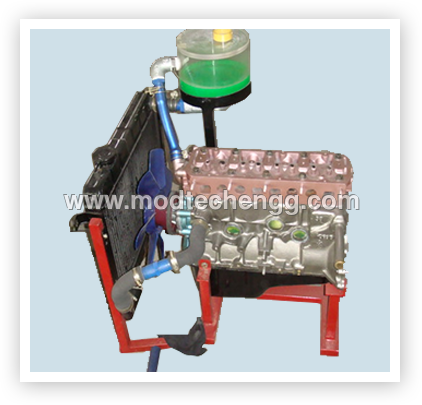
Tell us about your requirement

Price:
Quantity
Select Unit
- 50
- 100
- 200
- 250
- 500
- 1000+
Additional detail
Mobile number
Email


 Send Inquiry
Our Products
- Cut Section Complete Chassis With Electricals
- Cut Section Complete Chassis Without Electricals
- MODEL OF ENGINE ASSEMBLY WITH CLUTCH & GEAR BOX
- CUT SECTION MODEL OF ENGINE
- Engine Assembly with Clutch & Gear Box
- CUT SECTION MODEL OF TWO STROKE SINGLE CYLINDER DI
- Cut section Model Of Gear Box
- Cut section Model of Steering Gear Box
- Cut Section Model of Clutches
- Cut Section Model of Differential with Rear Axle
- Cut Section Model of Brake System
- Cut Section Model of Electrical System
- Cut Section Model of Fuel Supply System
- Cut Section Model Of Suspension System
- Cut Section Model Of Lubrication & Cooling System
- Cut Section Model Of Different Small Components
- Four Stroke Petrol Carburettor Engine For Practice
- Four Stroke Petrol Mpfi Engine Setup For Practice
- 4 Stroke Petrol Carburator Engine With Lpg Setup
- Four Stroke Petrol Mpfi Engine With Lpg Setup
- Four Stroke Diesel Engine Setup
- Two Wheeler Petrol Engine Of Running Condition
- Instruction Boards/Training Platforms
- Training Module For The Engines
- Test Rigs
- Cut section model Of Complete Vehicle
- Cut Section Model Of Engine Working
- Cut section Model Of Different Automobile Parts
- Cut Section Model Of Two Wheeler Aggregator
- Practice/ Running Engine Setup
- Tool And Equipments
- Model Of Auto Electricals
- Garage Tools & Equipments
- Cut Sectioned Engine Assembly With Clutch & Gear
- Exhibition Models

Plot No. 95, Behind Omex Auto, Bommasandra Jigani Link Road, Jigini Post, Bengaluru - 562105, Karnataka, India

Mr Sunil J.
(Partner)
Mobile :08045479896
 Send Inquiry
 Send SMS
Developed and Managed by Infocom Network Private Limited.
