
Call us now :08045479896
 Send Inquiry
 Send Inquiry
Cut Section Model Of Different Small Components
MOQ : 1 Unit
Cut Section Model Of Different Small Components Specification
- Stand Type
- Mounted Display Stand
- Shaping Mode
- Cut Section
- Material
- Plastic and Metal (Mixed)
- Product Type
- Mechanical Training Model
- Mould For
- Mechanical Component Demonstration
- Mould Size
- Assorted Small Components
- Mould Material
- Durable ABS Plastic & Metal Parts
- Design
- Educational Cut Section
- Quality
- High Precision, Lab-grade
- Finish
- Smooth Surface Finish
- Feature
- Detailed Internal Structure Visualization
- Model Type
- Bench-top Model
- Assembly
- Pre-assembled
- Durability
- Corrosion Resistant
- Suitable For
- Technical Institutes, Colleges, Engineering Labs
- Application
- Engineering Training & Academic Demonstration
- Color
- Multi-color for Easy Identification
- Packaging
- Carton Box with Shockproof Foam
- Display
- Multiple Component Sections
- Weight
- Approx. 2-3 kg
Cut Section Model Of Different Small Components Trade Information
- Minimum Order Quantity
- 1 Unit
- Payment Terms
- Western Union, Paypal, Telegraphic Transfer (T/T), Cheque
- Supply Ability
- 100 Units Per Week
- Delivery Time
- 1 Months
- Main Export Market(s)
- Australia, North America, South America, Eastern Europe, Western Europe, Central America, Asia
- Main Domestic Market
- All India
About Cut Section Model Of Different Small Components
Cut Section Model Of Different Automobile Parts And Accessories Suitably Painted And Mounted On A Wooden Board:
Product Range
| Model No. | Description |
|---|---|
| MT-P01 | Self starter (axle type/non axle type) |
| MT-P02 | Dynamo |
| MT-P03 | Distributor |
| MT-P04 | Mechanical Fuel pump |
| MT-P05 | Electrical Fuel pump |
| MT-P06 | Carburettors Simple Type-2 wheeler |
| MT-P07 | Carburettors Solex Type-4 wheeler |
| MT-P08 | Carburettors Mikuni type |
| MT-P09 | Radiator |
| MT-P10 | Ignition coil |
| MT-P11 | Shock absorber |
| MT-P12 | Brake cylinder and master cylinder |
| MT-P13 | Speedo meter |
| MT-P14 | Water pump |
| MT-P15 | FIP Pneumatic Governor (Four Cylinder engine) |
| MT-P16 | FIP RQ governor (Six cylinder Engine) |
| MT-P17 | FIP RSV governor (Six cylinder Engine) |
| MT-P18 | FIP Distributor type ( four Cylinder) |
| MT-P19 | I.C.Injector (4 Types) |
| MT-P20 | Diesel Filter |
| MT-P21 | Gear Lubrication pump |
| MT-P22 | Propeller shaft |
| MT-P23 | Feed pump |
| MT-P24 | Alternator |
| MT-P25 | Silencer |
| MT-P26 | Catalytic converter |
| MT-P27 | Fuel Pump diaphragm type |
| MT-P28 | Oil Pump External |
| MT-P29 | Oil Pump internal |
| MT-P30 | Vacuum Pump (Vane type) |
| MT-P31 | Vacuum Pump (Rotary type) |
| MT-P32 | piston Pump (air Compressor) |
| MT-P33 | Turbocharger |
| MT-P34 | Fluid flywheel/ Torque converter |
| MT-P35 | Alkaline Battery |
| MT-P36 | Air Cleaner |
Visualize Internal Mechanisms Effortlessly
These cut section models reveal intricate internal structures, utilizing color coding to highlight individual parts. Perfectly suited for technical education, they facilitate hands-on understanding without risking damage to actual machinery. The mixed-material construction ensures durability and longevity for repeated demonstration and study.
Ready-to-Use Educational Demonstrators
Delivered fully pre-assembled and securely packaged, each model is immediately ready for use in classrooms, labs, or workshops. Mounted on a stable display stand, these models are ideal for both instructor-led presentations and self-guided exploration by students.
Engineered for Academic Excellence
Crafted with high-precision techniques using laboratory-grade materials, these models deliver both accuracy and safety. The corrosion-resistant and smooth-surfaced finish ensures minimal maintenance and an attractive appearance, supporting years of educational use.
FAQs of Cut Section Model Of Different Small Components:
Q: How does the cut section model facilitate learning in engineering education?
A: The model allows students to observe detailed internal structures of mechanical components, making abstract concepts tangible. Its multi-color design distinguishes each part, helping learners understand assembly and function during engineering training and academic demonstrations.Q: What components are typically displayed in these cut section models?
A: The models showcase a variety of small mechanical parts, selected to illustrate key engineering principles. Featuring assorted component sizes, each model highlights different mechanisms and assembly methods, suitable for mechanical demonstrations.Q: When is the ideal time to use these models in an academic setting?
A: These models are best used during theoretical lessons, lab sessions, or practical demonstrations. They enhance comprehension when instructors introduce new machinery concepts or when students need to visualize internal component interactions.Q: Where can these cut section models be utilized most effectively?
A: They are particularly useful in technical institutes, engineering colleges, and laboratory environments where hands-on learning and demonstration of complex mechanisms are required.Q: What is the process behind creating these educational models?
A: Manufactured in India, the models are crafted using high precision lab-grade techniques. Made from a mix of ABS plastic and metal parts, they are molded and cut to clearly expose internal structures, then assembled with a corrosion-resistant, smooth surface finish.Q: How does the model benefit users compared to traditional learning resources?
A: Unlike textbooks or digital images, these physical models provide a tactile learning experience. Learners can appreciate the real spatial relationships and movements within components, leading to a deeper and more lasting understanding of engineering concepts.Q: What measures ensure the durability and safety of these models during regular use?
A: The use of corrosion-resistant materials, robust ABS plastic, and smooth finishes ensures each model withstands frequent handling. They are securely packed in carton boxes with shockproof foam, reducing transit damage and ensuring safe delivery.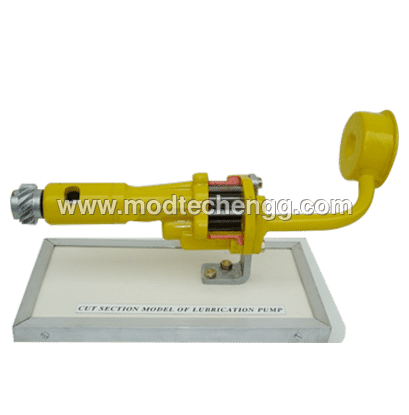
Tell us about your requirement

Price:
Quantity
Select Unit
- 50
- 100
- 200
- 250
- 500
- 1000+
Additional detail
Mobile number
Email


 Send Inquiry
Our Products
- Cut Section Complete Chassis With Electricals
- Cut Section Complete Chassis Without Electricals
- MODEL OF ENGINE ASSEMBLY WITH CLUTCH & GEAR BOX
- CUT SECTION MODEL OF ENGINE
- Engine Assembly with Clutch & Gear Box
- CUT SECTION MODEL OF TWO STROKE SINGLE CYLINDER DI
- Cut section Model Of Gear Box
- Cut section Model of Steering Gear Box
- Cut Section Model of Clutches
- Cut Section Model of Differential with Rear Axle
- Cut Section Model of Brake System
- Cut Section Model of Electrical System
- Cut Section Model of Fuel Supply System
- Cut Section Model Of Suspension System
- Cut Section Model Of Lubrication & Cooling System
- Cut Section Model Of Different Small Components
- Four Stroke Petrol Carburettor Engine For Practice
- Four Stroke Petrol Mpfi Engine Setup For Practice
- 4 Stroke Petrol Carburator Engine With Lpg Setup
- Four Stroke Petrol Mpfi Engine With Lpg Setup
- Four Stroke Diesel Engine Setup
- Two Wheeler Petrol Engine Of Running Condition
- Instruction Boards/Training Platforms
- Training Module For The Engines
- Test Rigs
- Cut section model Of Complete Vehicle
- Cut Section Model Of Engine Working
- Cut section Model Of Different Automobile Parts
- Cut Section Model Of Two Wheeler Aggregator
- Practice/ Running Engine Setup
- Tool And Equipments
- Model Of Auto Electricals
- Garage Tools & Equipments
- Cut Sectioned Engine Assembly With Clutch & Gear
- Exhibition Models

Plot No. 95, Behind Omex Auto, Bommasandra Jigani Link Road, Jigini Post, Bengaluru - 562105, Karnataka, India

Mr Sunil J.
(Partner)
Mobile :08045479896
 Send Inquiry
 Send SMS
Developed and Managed by Infocom Network Private Limited.
