
Call us now :08045479896
 Send Inquiry
 Send Inquiry
CUT SECTION MODEL OF LIVE FRONT AXLE ASSEMBLY
MOQ : 1 , , Unit
CUT SECTION MODEL OF LIVE FRONT AXLE ASSEMBLY Specification
- Stand Type
- Sturdy Metal Base Stand
- Shaping Mode
- Cut Section Model
- Material
- High-grade metal and acrylic
- Product Type
- Live Front Axle Assembly Model
- Mould For
- Educational Demonstration
- Mould Size
- Approx. 80x30x30 cm
- Mould Material
- Precision Steel and Transparent Acrylic
- Design
- Sectional With Color-coded Components
- Quality
- Laboratory Grade
- Model Functionality
- Manual Rotation For Demonstrating Working Mechanism
- Educational Value
- Illustrates Power Transmission And Differential Mechanism
- Assembly Type
- Pre-assembled, Ready For Use
- Finish
- Corrosion-resistant Coating
- Ideal Use
- Automobile Engineering Training, Polytechnic, Mechanical Labs
- Sectional View
- Detailed Exposure Of Bevel Gears, Differential, Axle Shafts
- Mounting
- Firmly Fixed On Display Stand With Anti-slip Feet
- Weight
- Approximately 20-25 kg
- Brand Compatibility
- Universal Model For Various Vehicle Types
- Visual Clarity
- Painted Internal Parts For Easy Identification
CUT SECTION MODEL OF LIVE FRONT AXLE ASSEMBLY Trade Information
- Minimum Order Quantity
- 1 , , Unit
- Payment Terms
- Western Union, Paypal, Cheque
- Supply Ability
- 100 Units Per Week
- Delivery Time
- 1 Months
- Main Export Market(s)
- Australia, North America, South America, Eastern Europe, Middle East, Western Europe, Africa, Central America, Asia
- Main Domestic Market
- All India
CUT SECTION MODEL OF LIVE FRONT AXLE ASSEMBLY About
Model No.MT-J03
CUT SECTION MODEL OF LIVE FRONT AXLE ASSEMBLY (WORKING) :
This model is made out of original used light vehicle, suitably sectioned to show the action of Differential gear box and Brake drums in Rear axle. A Crank handle is provided to demonstrate the model. The whole model is mounted on a sturdy iron frame.
Comprehensive Demonstration Model
This live front axle assembly model showcases the functioning of key automotive components, including bevel gears, differentials, and axle shafts. Users can manually rotate the assembly to simulate real-world mechanical operations, providing a tangible learning experience for students and instructors alike.
Designed for Clarity and Engagement
Painted, color-coded internal parts and a transparent acrylic section ensure all crucial mechanisms are visible and easily identifiable. This feature simplifies complex engineering concepts, making them accessible for classroom observation and demonstration.
Built for Durability and Convenience
Manufactured from laboratory-grade metal and acrylic, with a corrosion-resistant finish, the model stands up to regular educational use. The pre-assembled units sturdy display stand and anti-slip feet guarantee stability during demonstrations, ensuring safety and reliability.
FAQs of CUT SECTION MODEL OF LIVE FRONT AXLE ASSEMBLY:
Q: How does the manual rotation feature help in understanding the axle assemblys function?
A: Manual rotation allows users to observe how power transmission and differential mechanisms operate in real-time. By turning the assembly, students can see the interaction between bevel gears and axle shafts, deepening their understanding of vehicle dynamics.Q: What makes this model suitable for automobile engineering training and polytechnic labs?
A: The model provides a detailed sectional view of a live front axle assembly with painted, easily identifiable components. Its universal compatibility, ready-to-use assembly, and educational value ensure it fits seamlessly into technical training environments.Q: When should this cut section model be used in the curriculum?
A: This model is ideally introduced during lessons covering automotive transmission, power flow, and differential systems. It is particularly effective when paired with theoretical instruction, enabling hands-on learning and real-time demonstration of complex mechanisms.Q: Where should the model be placed for optimal usage during demonstrations?
A: It should be set on a stable, flat surface using its sturdy metal base with anti-slip feet. The anti-slip design ensures the model remains firmly in position, allowing for safe and interactive demonstration sessions in classrooms or laboratories.Q: What is the process of demonstrating the differential mechanism using this model?
A: Instructors or students can rotate the input shaft manually to show how motion is transferred through bevel gears to the axle shafts. The sectioned, color-coded components make each stage visible, highlighting how the differential allows wheels to rotate at different speeds.Q: What benefit does the corrosion-resistant coating offer?
A: The corrosion-resistant finish prolongs the lifespan of the model, making it suitable for regular handling and exposure to varied laboratory environments without degradation, ensuring consistent instructional quality over time.Q: Is this model compatible with all vehicle training programs?
A: Yes, this universal cut section model is designed to represent various vehicle types, making it adaptable for a wide range of automobile engineering courses and educational settings.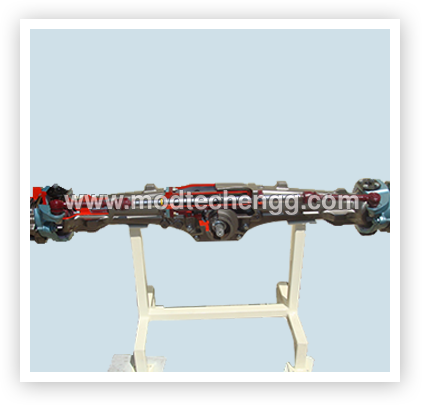
Tell us about your requirement

Price:
Quantity
Select Unit
- 50
- 100
- 200
- 250
- 500
- 1000+
Additional detail
Mobile number
Email

More Products in Cut Section Model of Differential with Rear Axle Category
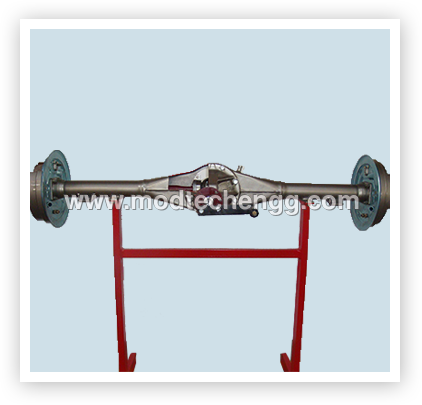
CUT SECTION MODEL OF SEMI FLOATING DIFFERENTIAL
Price 200000 INR
Minimum Order Quantity : 1 , , Unit
Quality : Precisionengineered, demonstration grade
Stand Type : Stable metallic base with mounting fixtures
Shaping Mode : Other, Educational Cut Section Model
Material : Other, Highgrade acrylic and metal components
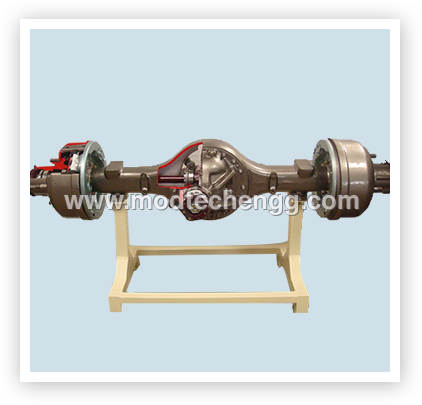
CUT SECTION MODEL OF FULLY FLOATING DIFFEREINTIAL
Price 200000 INR
Minimum Order Quantity : 1 Unit
Quality : Precision Machining; Durable Finish
Stand Type : Robust Metal Stand
Shaping Mode : Other, Cut Section Model
Material : Other, Highgrade Metal and Alloy

 Send Inquiry
Our Products
- Cut Section Complete Chassis With Electricals
- Cut Section Complete Chassis Without Electricals
- MODEL OF ENGINE ASSEMBLY WITH CLUTCH & GEAR BOX
- CUT SECTION MODEL OF ENGINE
- Engine Assembly with Clutch & Gear Box
- CUT SECTION MODEL OF TWO STROKE SINGLE CYLINDER DI
- Cut section Model Of Gear Box
- Cut section Model of Steering Gear Box
- Cut Section Model of Clutches
- Cut Section Model of Differential with Rear Axle
- Cut Section Model of Brake System
- Cut Section Model of Electrical System
- Cut Section Model of Fuel Supply System
- Cut Section Model Of Suspension System
- Cut Section Model Of Lubrication & Cooling System
- Cut Section Model Of Different Small Components
- Four Stroke Petrol Carburettor Engine For Practice
- Four Stroke Petrol Mpfi Engine Setup For Practice
- 4 Stroke Petrol Carburator Engine With Lpg Setup
- Four Stroke Petrol Mpfi Engine With Lpg Setup
- Four Stroke Diesel Engine Setup
- Two Wheeler Petrol Engine Of Running Condition
- Instruction Boards/Training Platforms
- Training Module For The Engines
- Test Rigs
- Cut section model Of Complete Vehicle
- Cut Section Model Of Engine Working
- Cut section Model Of Different Automobile Parts
- Cut Section Model Of Two Wheeler Aggregator
- Practice/ Running Engine Setup
- Tool And Equipments
- Model Of Auto Electricals
- Garage Tools & Equipments
- Cut Sectioned Engine Assembly With Clutch & Gear
- Exhibition Models

Plot No. 95, Behind Omex Auto, Bommasandra Jigani Link Road, Jigini Post, Bengaluru - 562105, Karnataka, India

Mr Sunil J.
(Partner)
Mobile :08045479896
 Send Inquiry
 Send SMS
Developed and Managed by Infocom Network Private Limited.
