
Call us now :08045479896
 Send Inquiry
 Send Inquiry
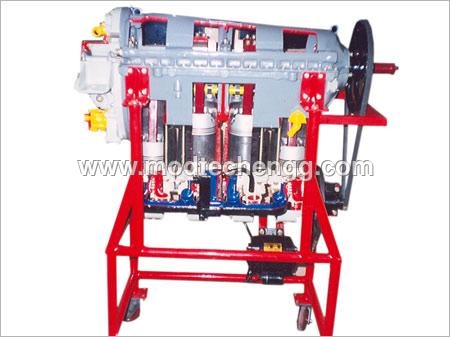
Engine Training Module
Price 2000.00 INR/ Piece
MOQ : 30 Pieces, Piece
Engine Training Module Specification
- Size
- Standard (Customized on Request)
- Features
- Movable Base with Lockable Wheels, Engine Cut-Section View, Functioning Demonstration, Corrosion Resistant Surface
- Assembly
- Pre-assembled Module, Ready for Demonstration
- Use
- Engineering Colleges, Technical Institutes, Automobile Training Centers
- Weight
- Approx. 80-100 kg
- Surface Finish
- Powder Coated & Polished
- Power Type
- Manual/AC Electrical Starter (as per model)
- Model No
- ETM-1001 (Reference)
- Style
- Educational Demonstration Model
- Material
- Mild Steel Chassis, Engine Components: Metal Alloys
- Dimensions
- 4 x 2 x 2 ft (approx.)
- Shape
- Rectangular Base with Engine Assembly
- Color
- Blue, Silver, Black (as per image)
- Function
- Internal Combustion Engine Training & Demonstration
- Age
- Above 16 Years (Students, Trainees)
- Advantage
- Hands-on Demonstration and Realistic Simulation
- Instrumentation
- Analog Tachometer and Temperature Gauge
- Teaching Aid
- Cutaway Engine Sections for Internal Visualisation
- Ignition System
- Demonstrates Spark Ignition (for Petrol model)
- Transmission
- Includes Gearbox, Clutch, and Controls
- Safety Features
- Protective Guards, Emergency Shutoff Switch
- Engine Type
- Petrol or Diesel 4-Stroke Single Cylinder (as per variant)
- Suitable For
- Automobile Engineering, Mechanical Labs, Vocational Training
- Starter Mechanism
- Electrical Self-Starter (optional hand crank)
- Mounting
- Heavy-duty Wheeled Platform with Locking mechanism
Engine Training Module Trade Information
- Minimum Order Quantity
- 30 Pieces, Piece
- Payment Terms
- Paypal, Western Union, Cheque
- Supply Ability
- 100 Pieces, Piece Per Month
- Delivery Time
- 30 Days
- Main Export Market(s)
- Australia, North America, Eastern Europe, Western Europe, Middle East, Africa, Central America, South America, Asia
- Main Domestic Market
- All India
Engine Training Module About
The device is designed based on latest technology petrol engines with Multi point fuel injection system. The trainer helps to simulate engine startup, speedup, slowdown and other actions so as to illustrate the structure and working principle of MPFI engines.
Features
- Real and operating Petrol MPFI engine, illustrating the structure and working process.
- Coloured circuit diagram on the training Module printed on to 6mm organic glass base..
- Detection terminals for operator to detect various sensors, actuators, electrical signals for engine control unit, such as resistive, voltage, current , frequency and wave form signals are provided on to the printed circuit diagram.
- Automobile meters are fitted on to the training module along with the printed circuit diagram, to demonstrate engine speed, temperature, fuel pressure, charging light etc.,
- The training module is fitted with diagnostic socket (DLC) for universal automobile decoder(Scan tool) to read fault codes, clear fault codes and read data stream.
- Fault setting switch bank will be provided to induce faults in the training module to demonstrate the fault and to diagnose faults.
- Good working condition engine will be provided with fuel tank and battery. Throttle control is provided on the module to accelerate.
- The training module is fabricated using steel pipe frame with spray painted for good looks and the entire setup is provided with caster wheels with brakes for easy movement of the same.
Comprehensive Demonstration Platform
This engine training module offers a complete, real-world demonstration of fundamental engine systems. From the gearbox and clutch to the ignition, students can observe, interact with, and understand internal combustion processes using actual metal-alloy components and cut-away visualization. The module supports both petrol (spark ignition) and diesel variants.
Enhanced Safety and Ease of Use
Designed for educational environments, the ETM-1001 includes protective guards, emergency shutoff switches, and a heavy-duty wheeled platform with a locking mechanism. The assembled unit is ready-to-use and promotes safe, hands-on operation for technical instruction in class or lab settings.
Ideal for Technical Education
Suitable for engineering colleges, mechanical and automobile labs, and vocational centers, this module encourages active, practice-based learning. Analog instruments such as a tachometer and temperature gauge make operational data accessible, enhancing diagnostic and analytical skills in future engineers.
FAQ's of Engine Training Module:
Q: How is the ETM-1001 engine training module used in technical education?
A: The ETM-1001 is designed for hands-on demonstrations in engineering colleges and vocational centers. It allows students to interact with real engine components, observe cutaway sections, and operate controls for realistic learning experiences in engine systems and diagnostics.Q: What safety features does the module include for student use?
A: Safety is ensured through protective guards around moving parts, an emergency shutoff switch for immediate power cut, and a locking mechanism on the wheeled base to prevent unintended movement during demonstrations or practice sessions.Q: When is the electrical self-starter used, and can the module be started manually?
A: The module features an AC electrical self-starter as standard for ease of demonstration, though an optional hand crank starting mechanism is available. This flexibility allows for both modern and manual starting methods during instructional sessions.Q: Where can the ETM-1001 training module be installed and used?
A: The training module is intended for use in academic and vocational settings such as mechanical labs, automobile engineering classrooms, or technical institutes. Its mobile, compact design enables placement anywhere safe space and electrical connections are available.Q: What processes and engine components can be studied using this module?
A: Students can explore the internal processes of a 4-stroke petrol or diesel engine, including combustion, ignition (spark or compression), and mechanical transmission through gearbox and clutch controls. The cutaway design aids in visualizing internal mechanisms typically hidden from view.Q: How does the module benefit students in engineering and technical courses?
A: By permitting close-up, practical demonstrations of engine operation, the module enriches theoretical studies with real-world application. This hands-on experience strengthens understanding of engine mechanics, troubleshooting, and instrumentation, preparing students for industrial scenarios.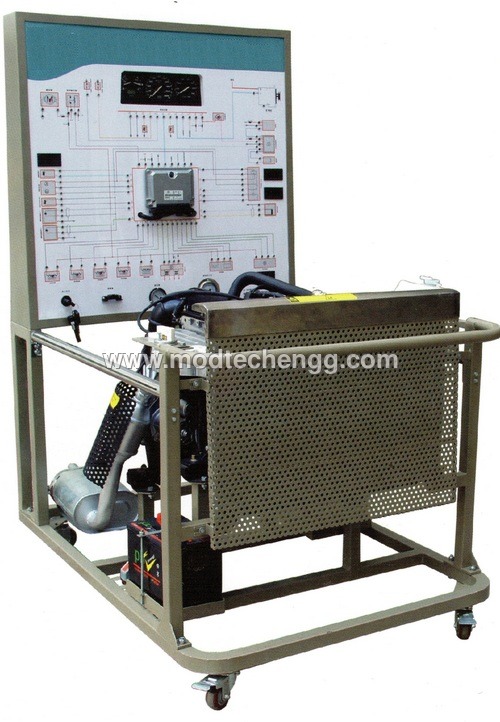
Tell us about your requirement

Price:
Quantity
Select Unit
- 50
- 100
- 200
- 250
- 500
- 1000+
Additional detail
Mobile number
Email

More Products in Cut Section Model Of Engine Working Category
Cut section model of Three cylinder MPFI Engine
Price 200000 INR
Minimum Order Quantity : 1 Piece
Shape : Rectangular base with exposed cylindrical engine form
Use : Demonstration of engine parts and MPFI system for teaching
Dimensions : Approx. 50 cm x 30 cm x 30 cm
Surface Finish : Powder Coated & Painted for corrosion protection
Cut section model of 3 Cylinder Carburator Engine
Price 200000 INR
Minimum Order Quantity : 1 Unit
Shape : Rectangular base with engine cutaway
Use : Demonstration, Teaching, and Training
Dimensions : Approx. 40 cm x 25 cm x 28 cm
Surface Finish : Smooth, painted & labeled
Diesel Engine Cut Section Model
Price 200000 INR
Minimum Order Quantity : 1 Piece
Shape : Rectangular base with cutsection cylinder assembly
Use : Demonstrational teaching aid for diesel engine study
Dimensions : Approx. 32 x 25 x 18 cm
Surface Finish : Painted and polished sectioned surfaces
Gypsy Aircraft Engine
Price 20000 INR
Minimum Order Quantity : 1 Piece
Shape : Rectangular Block with Cylindrical Components
Use : Light Aircraft Powerplant
Dimensions : 1150 mm x 600 mm x 750 mm
Surface Finish : Polished/Anodized

 Send Inquiry
Our Products
- Cut Section Complete Chassis With Electricals
- Cut Section Complete Chassis Without Electricals
- MODEL OF ENGINE ASSEMBLY WITH CLUTCH & GEAR BOX
- CUT SECTION MODEL OF ENGINE
- Engine Assembly with Clutch & Gear Box
- CUT SECTION MODEL OF TWO STROKE SINGLE CYLINDER DI
- Cut section Model Of Gear Box
- Cut section Model of Steering Gear Box
- Cut Section Model of Clutches
- Cut Section Model of Differential with Rear Axle
- Cut Section Model of Brake System
- Cut Section Model of Electrical System
- Cut Section Model of Fuel Supply System
- Cut Section Model Of Suspension System
- Cut Section Model Of Lubrication & Cooling System
- Cut Section Model Of Different Small Components
- Four Stroke Petrol Carburettor Engine For Practice
- Four Stroke Petrol Mpfi Engine Setup For Practice
- 4 Stroke Petrol Carburator Engine With Lpg Setup
- Four Stroke Petrol Mpfi Engine With Lpg Setup
- Four Stroke Diesel Engine Setup
- Two Wheeler Petrol Engine Of Running Condition
- Instruction Boards/Training Platforms
- Training Module For The Engines
- Test Rigs
- Cut section model Of Complete Vehicle
- Cut Section Model Of Engine Working
- Cut section Model Of Different Automobile Parts
- Cut Section Model Of Two Wheeler Aggregator
- Practice/ Running Engine Setup
- Tool And Equipments
- Model Of Auto Electricals
- Garage Tools & Equipments
- Cut Sectioned Engine Assembly With Clutch & Gear
- Exhibition Models

Plot No. 95, Behind Omex Auto, Bommasandra Jigani Link Road, Jigini Post, Bengaluru - 562105, Karnataka, India

Mr Sunil J.
(Partner)
Mobile :08045479896
 Send Inquiry
 Send SMS
Developed and Managed by Infocom Network Private Limited.
