
Call us now :08045479896
 Send Inquiry
 Send Inquiry
MODEL OF AIR CONDITIONING SYSTEM OF A CAR
MOQ : 1 Unit
MODEL OF AIR CONDITIONING SYSTEM OF A CAR Specification
- Stand Type
- Table Top With Framing
- Shaping Mode
- Model Simulation
- Material
- Plastic, Metal, Glass (As per assembly requirements)
- Product Type
- Educational Model
- Mould For
- Air Conditioning System of Car
- Mould Size
- Approx. 60 x 40 x 35 cm
- Mould Material
- Acrylic, PVC, Steel
- Design
- Cut Section/Working Model
- Quality
- Laboratory Standard
- Installation
- Ready to Use
- Power Supply
- 220V AC, 50Hz (For working models with compressor demo)
- Operation
- Manual/Working (depending on model version)
- Weight
- Approx. 10-12 kg
- Color
- Multi-color Coded Components
- Transparency
- Some components made transparent for internal view
- Packaging
- Secured, Foam boxed or Carton
- Scale
- Scaled down for educational demonstration
- Demonstration
- Shows compressor, condenser, expansion valve, evaporator, blower fan, connecting pipes
- Application
- Automobile Engineering, Demonstration, Training, Laboratory use
- Features
- Durable construction, easy to assemble/disassemble, corrosion-resistant
MODEL OF AIR CONDITIONING SYSTEM OF A CAR Trade Information
- Minimum Order Quantity
- 1 Unit
- Payment Terms
- Telegraphic Transfer (T/T), Paypal, Western Union, Cheque
- Supply Ability
- 100 Units Per Week
- Delivery Time
- 1 Week
- Main Export Market(s)
- Australia, Central America, North America, Eastern Europe, Middle East, Africa, South America, Western Europe, Asia
- Main Domestic Market
- All India
MODEL OF AIR CONDITIONING SYSTEM OF A CAR About
Model No. MT-L10
CUT SECTION MODEL OF AIR CONDITIONING SYSTEM OF A CAR. (NON WORKING)
This model is made out of original used parts, will be suitably sectioned And Arranged to demonstrate the internal construction details showing the minute information such as AC compressor, condenser, radiator, its pipe lining, blower/fan assembly etc., the model will be suitably painted and The entire model is mounted on a sturdy iron frame.
Comprehensive Demonstration Model
This air conditioning system model provides a clear visual and functional representation of an automobile A/C system. The inclusion of transparent sections helps users observe the working parts and flow processes within the unit, enhancing both teaching and learning experiences.
Designed for Educational Excellence
Specially crafted for use in automotive engineering laboratories, training centers, and classroom environments, the model is built to laboratory standards with safety, durability, and ease of handling in mind. Multi-color coded components and labelled parts assist in quick identification and understanding.
Effortless Setup and Sturdy Build
Ready to use out of the box and mounted on a robust table-top frame, this model is easy to install and relocate when needed. Corrosion-resistant materials provide a long service life, while the modular design supports easy assembly, disassembly, and regular maintenance.
FAQs of MODEL OF AIR CONDITIONING SYSTEM OF A CAR:
Q: How does this model demonstrate the air conditioning process in a car?
A: The model showcases all essential componentscompressor, condenser, expansion valve, evaporator, and blower fanconnected by pipes and color-coded for clarity. Transparent sections let users observe the refrigerants pathway and phase changes, demonstrating how a cars A/C system cools the interior.Q: What is the primary application of this air conditioning system model?
A: This model is primarily used for teaching and demonstration purposes in automobile engineering courses, laboratory training sessions, and technical workshops. It helps students and trainees visually understand the working, components, and flow of an automotive A/C system.Q: When is this model utilized during training or study?
A: The model is typically brought into classrooms, labs, or training environments when instructors need to demonstrate the principles of automotive air conditioning or during hands-on practical sessions on vehicle climate control systems.Q: Where can this model be installed or positioned for use?
A: With its table-top frame and moderate size (approximately 60 x 40 x 35 cm), the model is best placed in laboratories, classrooms, or training centers. It requires minimal installationjust positioning on a stable surface and connecting to the power supply (for working versions).Q: What materials are used in the construction of this demonstration model?
A: The model is assembled from a combination of durable plastic, metal, and glass, depending on the assembly requirements. Molded parts use acrylic, PVC, and steel, which ensure strength, transparency for instructional use, and resistance to corrosion.Q: How does the transparency of some components benefit learning?
A: Key components are crafted with transparent materials to allow unobstructed viewing of internal mechanisms. This feature greatly enhances the educational value by revealing how refrigerant moves and changes state within the system, offering insights not possible with standard, opaque models.Q: What are the main benefits of using this model for demonstration and training?
A: This model enables practical, hands-on understanding of automobile air conditioning systems. Its detailed construction supports easy identification of parts, real-time process visualization, and experiential learningmaking complex HVAC concepts simpler to grasp for students and trainees.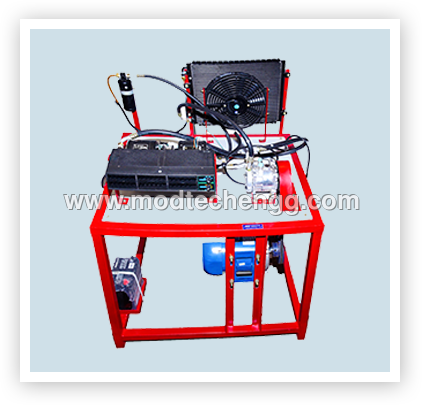
Tell us about your requirement

Price:
Quantity
Select Unit
- 50
- 100
- 200
- 250
- 500
- 1000+
Additional detail
Mobile number
Email

More Products in Cut Section Model of Electrical System Category
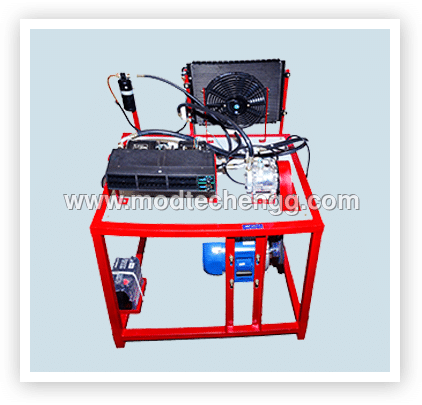
DEMONSTRATION BOARD OF AIR CONDITIONING SYSTEM
Price 2000 INR
Minimum Order Quantity : 1 Unit
Shaping Mode : Other, Demonstration Board
Product Type : Air Conditioning System Demonstrator
Mould Size : Panel Size approx. 1200mm x 800mm
Mould Material : Not Applicable (No Mould Educational Board)
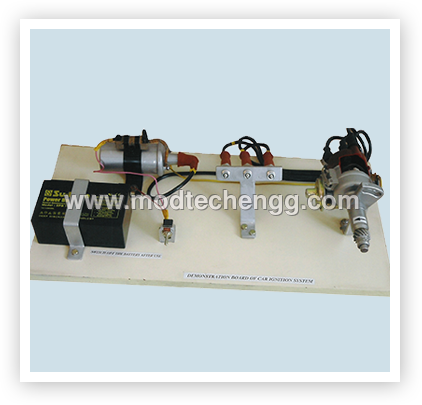
DEMONSTRATION BOARD OF IGNITION SYSTEM OF AUTOMATI
Price 2000 INR
Minimum Order Quantity : 1 , , Piece
Shaping Mode : Other, Demonstration Board
Product Type : Educational Training Equipment
Mould Size : Standard Demo Board Size (Approx. 700mm x 600mm)
Mould Material : Steel and Acrylic Panel
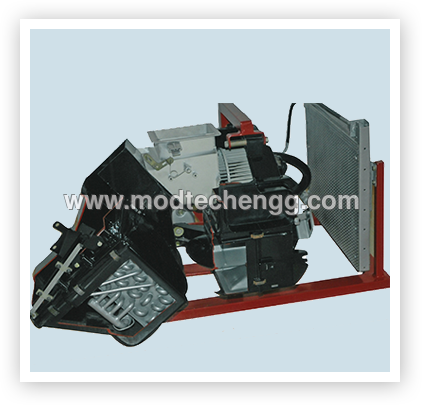
CUT SECTION MODEL OF MOCK LAYOUT OF A CAR WIRING
Price 20000 INR
Minimum Order Quantity : 1 Unit
Shaping Mode : Other, Cut Section Model
Product Type : Mock Layout Model
Mould Size : Standard Car Layout (approx. 1000mm x 650mm)
Mould Material : Polymer Base with Metal Connectors
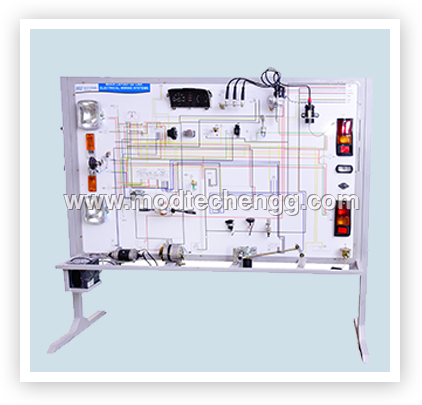
CUT SECTION MODEL OF MOCK LAYOUT OF A CAR WIRING
Price 20000 INR
Minimum Order Quantity : 1 Unit
Shaping Mode : Other, Cut Section
Product Type : Demonstration Model
Mould Size : Standard (Approx. 900 x 400 x 150 mm)
Mould Material : Plastic and Metal

 Send Inquiry
Our Products
- Cut Section Complete Chassis With Electricals
- Cut Section Complete Chassis Without Electricals
- MODEL OF ENGINE ASSEMBLY WITH CLUTCH & GEAR BOX
- CUT SECTION MODEL OF ENGINE
- Engine Assembly with Clutch & Gear Box
- CUT SECTION MODEL OF TWO STROKE SINGLE CYLINDER DI
- Cut section Model Of Gear Box
- Cut section Model of Steering Gear Box
- Cut Section Model of Clutches
- Cut Section Model of Differential with Rear Axle
- Cut Section Model of Brake System
- Cut Section Model of Electrical System
- Cut Section Model of Fuel Supply System
- Cut Section Model Of Suspension System
- Cut Section Model Of Lubrication & Cooling System
- Cut Section Model Of Different Small Components
- Four Stroke Petrol Carburettor Engine For Practice
- Four Stroke Petrol Mpfi Engine Setup For Practice
- 4 Stroke Petrol Carburator Engine With Lpg Setup
- Four Stroke Petrol Mpfi Engine With Lpg Setup
- Four Stroke Diesel Engine Setup
- Two Wheeler Petrol Engine Of Running Condition
- Instruction Boards/Training Platforms
- Training Module For The Engines
- Test Rigs
- Cut section model Of Complete Vehicle
- Cut Section Model Of Engine Working
- Cut section Model Of Different Automobile Parts
- Cut Section Model Of Two Wheeler Aggregator
- Practice/ Running Engine Setup
- Tool And Equipments
- Model Of Auto Electricals
- Garage Tools & Equipments
- Cut Sectioned Engine Assembly With Clutch & Gear
- Exhibition Models

Plot No. 95, Behind Omex Auto, Bommasandra Jigani Link Road, Jigini Post, Bengaluru - 562105, Karnataka, India

Mr Sunil J.
(Partner)
Mobile :08045479896
 Send Inquiry
 Send SMS
Developed and Managed by Infocom Network Private Limited.
