
Call us now :08045479896
 Send Inquiry
 Send Inquiry
Single Cylinder Four Stroke Diesel Engine Test Rig
MOQ : 1 Unit
Single Cylinder Four Stroke Diesel Engine Test Rig Specification
- Power Type
- Diesel (Compression Ignition IC Engine)
- Use
- Educational & Research Purpose for Engine Performance Studies
- Weight
- Approximately 150 kg
- Assembly
- Pre-assembled on Rigid Frame
- Model No
- SC-DETR/01
- Features
- Integrated with Dynamometer, Fuel and Air Measurement, Digital Controllers, and Safety Arrangements
- Size
- Standard Laboratory Scale
- Surface Finish
- Powder Coated & Painted
- Style
- Laboratory Test Rig
- Type
- Single Cylinder Four Stroke Diesel Engine Test Rig
- Material
- Mild Steel Frame with Cast Iron and Steel Components
- Dimensions
- 1200 mm (L) x 750 mm (W) x 1100 mm (H)
- Shape
- Rectangular Base, Engine and Accessories Mounted
- Color
- Blue/White (as shown in image)
- Function
- Testing and Demonstration of Four-Stroke Diesel Engine Operation
- Age
- Suitable for Undergraduate, Postgraduate, and Research Laboratories
- Advantage
- Comprehensive Engine Analysis and Performance Evaluation
- Engine Type
- Single Cylinder, Four Stroke, Water Cooled Diesel Engine
- Starting System
- Hand Crank/Manual
- Data Acquisition
- Manual/Optional Computerized Data Logging
- Cooling System
- Water Cooled with Water Flow Measurement
- Fuel Measurement
- Burette Method with Graduated Pipette
- Safety
- Overload Protection, Emergency Stop and Enclosed Rotating Components
- Instrumentation
- Digital Display for RPM, Temperature, Load, Fuel Consumption and Air Intake
- Exhaust Gas Measurement
- Optional Accessories for Smoke and Emission Analysis
- Applications
- Performance, Efficiency, Heat Balance, and Emission Studies
- Electrical Supply
- 230V AC, 50 Hz for Instrumentation (as applicable)
- Air Measurement
- Air Tank with Orifice and Manometer
- Engine Capacity
- 3.5 HP to 5 HP (Approx. 33.7 kW) at 1500 rpm
- Dynamometer
- Rope Brake or Eddy Current Dynamometer (as per model)
Single Cylinder Four Stroke Diesel Engine Test Rig Trade Information
- Minimum Order Quantity
- 1 Unit
- Payment Terms
- Western Union, Paypal, Telegraphic Transfer (T/T), Cheque
- Supply Ability
- 100 Units Per Week
- Delivery Time
- 1 Week
- Main Export Market(s)
- North America, Western Europe, Middle East, Africa, Central America, South America, Asia, Australia
- Main Domestic Market
- All India
Single Cylinder Four Stroke Diesel Engine Test Rig About
SINGLE CYLINDER FOUR STROKE DIESEL ENGINE TEST RIG
Engine: New AV1 Kirloskar Engine, 5HP,1500 RPM 4 Stroke Water cooled
Parameters measured
Performance test
Heat balance test
COMPUTERIZED MODULE
Parameters measured for Computerization module
Indicated HP
Indicated Torque
Combustion Pressure Vs Volume
Combustion Pressure Vs Crank angle
IMEP
Heat release curve
Standard Accessories
Fuel Measurement consumption by Volumetric method
Air Consumption using standard orifice & MS Air box
Digital RPM meter (Except Mechanical loading)
Digital Electronic torque controller for Eddy current dynamometer
Digital temperature gauges (Air IN, Exhaust OUT, Cooling Water IN, Cooling Water OUT)
Water flow Measurement through Rotor meter 2400 LPH
| MT-Y01-A | With Rope Brake Dynamometer |
| MT-Y01-B | With Hydraulic Brake Dynamometer |
| MT-Y01-C | With Electrical Dynamometer |
| MT-Y01-D | With Eddy Current Dynamometer |
Comprehensive Engine Testing and Measurement
Equipped with accurate digital displays and integrated sensors, this test rig facilitates real-time data collection for a wide range of engine performance variables, including RPM, temperature, load, fuel and air intake. Both manual and optional computerized data acquisition systems are supported, ensuring all test results are recorded and analyzed precisely.
Best-in-Class Safety and Durability
Safety is paramount with features such as overload protection, emergency stop, and securely enclosed rotating components. The rigs strong mild steel frame and cast iron engine parts are designed for durability and long-term use in busy academic laboratories or research facilities.
Designed for Educational and Research Excellence
Tailored for both teaching and research purposes, the test rigs straightforward assembly and operation, paired with clear instrumentation, allow students and researchers to efficiently conduct engine performance, efficiency, and emission studies. The standardized design makes it ideal for hands-on demonstrations and practical learning.
FAQs of Single Cylinder Four Stroke Diesel Engine Test Rig:
Q: How does the Single Cylinder Four Stroke Diesel Engine Test Rig measure engine performance?
A: The test rig measures engine performance by using integrated sensors and digital displays to monitor parameters like RPM, temperature, load, fuel and air consumption. Data can be recorded either manually or with an optional computerized logging system, enabling accurate evaluation of engine efficiency, heat balance, and emissions.Q: What is the process for conducting a performance test using this rig?
A: To run a test, start the engine with the manual hand crank, set the load on the dynamometer, and monitor fuel and air intake using the burette method and air tank with an orifice/manometer. Real-time readings of all key variables are displayed digitally, and results can be recorded manually or via the optional computer system for analysis.Q: When should the rigs safety features be engaged?
A: Safety features such as the emergency stop should be engaged immediately in the event of overload, abnormal engine behavior, or any unsafe conditions during operation. Overload protection and enclosed rotating components also work automatically to enhance operator safety during routine testing.Q: Where is this test rig best utilized?
A: This test rig is most effective in undergraduate and postgraduate engineering labs, technical institutes, and research facilities. Its standardized laboratory scale and integrated safety features make it ideal for academic use, hands-on training, and applied research projects.Q: What are the benefits of using the rope brake or eddy current dynamometer?
A: Both the rope brake and eddy current dynamometers accurately measure engine load and output power. While the rope brake offers a simple, cost-effective solution, the eddy current dynamometer provides finer control and can be preferred for advanced research or automated data logging setups.Q: How does the fuel and air measurement system work?
A: Fuel consumption is measured using the burette method with a graduated pipette, allowing for precise monitoring of fuel usage. Air intake is measured through an air tank equipped with an orifice and manometer, ensuring reliable data for performance calculations and emission analysis.Q: What is the primary advantage of this test rig for students and researchers?
A: The key advantage is its capability for comprehensive engine analysis and performance evaluation within a safe, user-friendly, and durable setup. Students and researchers gain valuable practical experience, deepening their understanding of four-stroke diesel engine operation and testing methodologies.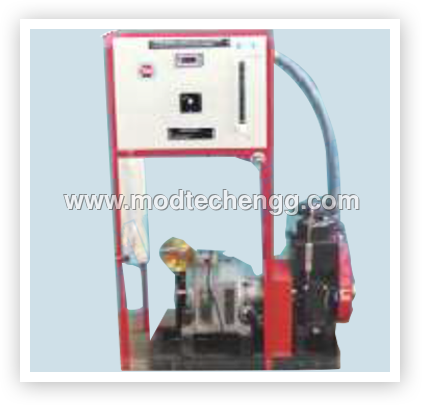
Tell us about your requirement

Price:
Quantity
Select Unit
- 50
- 100
- 200
- 250
- 500
- 1000+
Additional detail
Mobile number
Email

More Products in Test Rigs Category
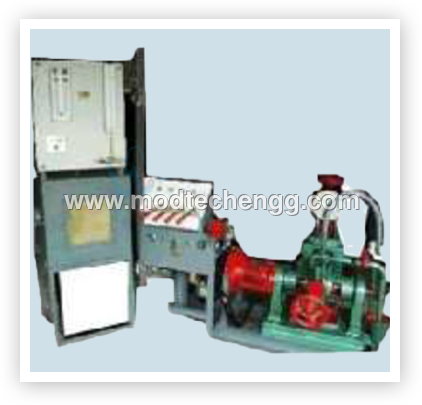
Four Stroke Four Cylinder Petrol Engine Test Rig
Price 20000 INR
Minimum Order Quantity : 1 Unit
Assembly : Fully Assembled & Ready to Use
Shape : Rectangular Platform with Cylindrical Engine Mount
Features : RPM Measurement, Torque Indicator, Fuel Measurement, Temperature Sensors, Mounted Instrumentation Panel
Function : Performance Test, Detailing Study

 Send Inquiry
Our Products
- Cut Section Complete Chassis With Electricals
- Cut Section Complete Chassis Without Electricals
- MODEL OF ENGINE ASSEMBLY WITH CLUTCH & GEAR BOX
- CUT SECTION MODEL OF ENGINE
- Engine Assembly with Clutch & Gear Box
- CUT SECTION MODEL OF TWO STROKE SINGLE CYLINDER DI
- Cut section Model Of Gear Box
- Cut section Model of Steering Gear Box
- Cut Section Model of Clutches
- Cut Section Model of Differential with Rear Axle
- Cut Section Model of Brake System
- Cut Section Model of Electrical System
- Cut Section Model of Fuel Supply System
- Cut Section Model Of Suspension System
- Cut Section Model Of Lubrication & Cooling System
- Cut Section Model Of Different Small Components
- Four Stroke Petrol Carburettor Engine For Practice
- Four Stroke Petrol Mpfi Engine Setup For Practice
- 4 Stroke Petrol Carburator Engine With Lpg Setup
- Four Stroke Petrol Mpfi Engine With Lpg Setup
- Four Stroke Diesel Engine Setup
- Two Wheeler Petrol Engine Of Running Condition
- Instruction Boards/Training Platforms
- Training Module For The Engines
- Test Rigs
- Cut section model Of Complete Vehicle
- Cut Section Model Of Engine Working
- Cut section Model Of Different Automobile Parts
- Cut Section Model Of Two Wheeler Aggregator
- Practice/ Running Engine Setup
- Tool And Equipments
- Model Of Auto Electricals
- Garage Tools & Equipments
- Cut Sectioned Engine Assembly With Clutch & Gear
- Exhibition Models

Plot No. 95, Behind Omex Auto, Bommasandra Jigani Link Road, Jigini Post, Bengaluru - 562105, Karnataka, India

Mr Sunil J.
(Partner)
Mobile :08045479896
 Send Inquiry
 Send SMS
Developed and Managed by Infocom Network Private Limited.
