
Call us now :08045479896
 Send Inquiry
 Send Inquiry
Chassis and Cut Section Model For Exhibision
MOQ : 1 Unit
Chassis and Cut Section Model For Exhibision Specification
- Stand Type
- Sturdy Metal Stand with Base Plate
- Shaping Mode
- Exhibition Model
- Material
- Mild Steel, Plastic Components & Acrylic Sections
- Product Type
- Chassis and Cut Section Model
- Mould Material
- Metal and Plastic
- Quality
- Exhibition Grade, Highly Detailed
Chassis and Cut Section Model For Exhibision Trade Information
- Minimum Order Quantity
- 1 Unit
- Payment Terms
- Paypal, Western Union, Cheque
- Supply Ability
- 100 Units Per Week
- Delivery Time
- 1 Week
- Main Export Market(s)
- Australia, South America, Eastern Europe, Western Europe, Middle East, Central America, Asia, North America, Africa
- Main Domestic Market
- All India
About Chassis and Cut Section Model For Exhibision
Exhibition - Chassis and Cut Section Model
Supported by our state-of-the-art infrastructure facilities, we are able to manufacture and supply Cut Section Exhibition Model. To win trust of our customers, we assure to use finest quality material in the manufacturing process of this model. To rule out possibility of any defect, these models are checked on various parameters under proper inspection of our quality experts. In addition, we offer Cut Section Exhibition Model in diverse specifications so as to meet the exact demands of our valued patrons.
Features:
- Seamless finish
- Resistance against abrasion
- Designing consistency
- Easy maintenance
Product Range


Exceptional Detailing for Educational Excellence
Engineered for exhibitions and demonstrations, this model presents intricate details of essential automobile systems, including the engine, suspension, and transmission. Sections are carefully cut and displayed for clear visibility of components, making it a powerful educational tool. Its durable construction ensures longevity, while the sturdy stand delivers stability for either permanent or temporary placement in classrooms, workshops, or exhibition spaces.
Interactive Learning Without Electrical Complexity
Designed for manual operation, the model enables users to move certain sections to demonstrate real automotive functions. This hands-on approach fosters deeper understanding and engagement among trainees and students without the need for complex electrical components or a power source, promoting safety and simplifying maintenance.
FAQs of Chassis and Cut Section Model For Exhibision:
Q: How does the Chassis and Cut Section Model demonstrate the working and assembly of automobile systems?
A: This model employs cutaway sections and manual movements to showcase the internal structure and operation of key automobile components such as the engine, transmission, suspension, differential, and steering. Users can manipulate specific parts to observe their functions, facilitating thorough understanding of assembly and operational principles.Q: What materials are used in the construction of this exhibition model?
A: The model is constructed using high-quality mild steel, plastic components, and clear acrylic sections. These materials provide durability, realistic detailing, and enhanced visibility, making it suitable for repeated demonstration and teaching purposes.Q: Where is this model typically installed or displayed?
A: Designed with flexibility in mind, the model can be positioned on a sturdy metal stand with a base plate for either temporary or permanent setups. It is commonly used in technical institutes, training centers, and auto shows across India, providing maximum visibility and accessibility for educational or exhibition needs.Q: What is the process for maintaining the model?
A: Maintenance is straightforward: the surfaces should be wiped clean regularly with a soft, dry cloth to remove dust and debris. Small, replaceable parts can be easily swapped out if worn or damaged, ensuring the model remains in optimal condition for teaching and display.Q: How does manual interactivity benefit users of the model?
A: Manual interactivity allows users to engage directly with the model, moving certain sections to see how automotive mechanisms operate in real life. This hands-on experience aids in grasping complex systems, making the model particularly valuable for instruction and demonstration.Q: When is an ideal time to use this model in technical education?
A: The model is best used during practical sessions, workshops, or demonstrations where understanding of automotive chassis architecture and subcomponents is required. It enhances learning by allowing students to observe and interact with tangible representations of automobile systems.Q: What makes this model suitable for exhibition and demonstration purposes?
A: Its exhibition-grade construction, highly detailed assembly, and robust stand provide both visual appeal and durability. The models interactive elements and clear sectioning make it an excellent choice for engaging audiences at exhibitions, technical training events, and classroom demonstrations.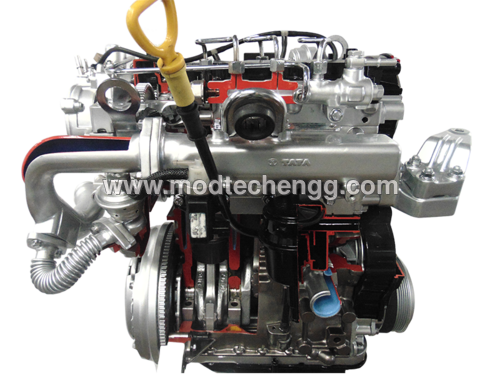
Tell us about your requirement

Price:
Quantity
Select Unit
- 50
- 100
- 200
- 250
- 500
- 1000+
Additional detail
Mobile number
Email


 Send Inquiry
Our Products
- Cut Section Complete Chassis With Electricals
- Cut Section Complete Chassis Without Electricals
- MODEL OF ENGINE ASSEMBLY WITH CLUTCH & GEAR BOX
- CUT SECTION MODEL OF ENGINE
- Engine Assembly with Clutch & Gear Box
- CUT SECTION MODEL OF TWO STROKE SINGLE CYLINDER DI
- Cut section Model Of Gear Box
- Cut section Model of Steering Gear Box
- Cut Section Model of Clutches
- Cut Section Model of Differential with Rear Axle
- Cut Section Model of Brake System
- Cut Section Model of Electrical System
- Cut Section Model of Fuel Supply System
- Cut Section Model Of Suspension System
- Cut Section Model Of Lubrication & Cooling System
- Cut Section Model Of Different Small Components
- Four Stroke Petrol Carburettor Engine For Practice
- Four Stroke Petrol Mpfi Engine Setup For Practice
- 4 Stroke Petrol Carburator Engine With Lpg Setup
- Four Stroke Petrol Mpfi Engine With Lpg Setup
- Four Stroke Diesel Engine Setup
- Two Wheeler Petrol Engine Of Running Condition
- Instruction Boards/Training Platforms
- Training Module For The Engines
- Test Rigs
- Cut section model Of Complete Vehicle
- Cut Section Model Of Engine Working
- Cut section Model Of Different Automobile Parts
- Cut Section Model Of Two Wheeler Aggregator
- Practice/ Running Engine Setup
- Tool And Equipments
- Model Of Auto Electricals
- Garage Tools & Equipments
- Cut Sectioned Engine Assembly With Clutch & Gear
- Exhibition Models

Plot No. 95, Behind Omex Auto, Bommasandra Jigani Link Road, Jigini Post, Bengaluru - 562105, Karnataka, India

Mr Sunil J.
(Partner)
Mobile :08045479896
 Send Inquiry
 Send SMS
Developed and Managed by Infocom Network Private Limited.
