
Call us now :08045479896
 Send Inquiry
 Send Inquiry
FOUR STROKE PETROL CARBURATOR ENGINE WITH LPG SETUP
MOQ : 1 Unit
FOUR STROKE PETROL CARBURATOR ENGINE WITH LPG SETUP Specification
- Surface Finish
- Powder-coated frame, machined engine surfaces
- Size
- Base size approx. 1200 mm x 700 mm; overall height 1200 mm
- Style
- Educational training equipment
- Use
- Demonstration and study of four-stroke engine operation with alternative fuel (LPG)
- Assembly
- Fully assembled for use
- Features
- Four-stroke petrol engine, LPG conversion kit, demonstration panel, instrumentation for performance measurement
- Weight
- Approx. 70-90 kg
- Power Type
- Internal combustion engine (Petrol/LPG)
- Model No
- PCM-LPG-FS-2024
- Type
- Four-stroke single cylinder engine with LPG setup
- Material
- Mild Steel with aluminium and cast iron engine components
- Dimensions
- Standard laboratory setup; Base frame approx. 1200 mm x 700 mm x 1200 mm
- Shape
- Rectangular base with mounted engine
- Color
- Blue/black coated frame, metallic engine finish
- Function
- Operational analysis, performance study, and emission comparison
- Age
- Suitable for engineering students and professionals
- Advantage
- Dual fuel operation (Petrol/LPG), practical understanding of engine mechanisms
- Cylinder Configuration
- Single cylinder, air-cooled
- Displacement
- Approx. 150 cc
- Ignition System
- Spark ignition
- Safety Features
- Pressure regulators, flame arrestor for LPG, overload protection
- Switching Mechanism
- Manual fuel selection switch
- LPG Kit
- Integrated with mixer valve, regulator, and safety controls
- Rated Power Output
- 1.5 kW at 3000 rpm (typical)
- Mounting
- Engine rigidly mounted on vibration-damping frame
- Instrumentation
- Digital RPM meter, temperature sensors, fuel consumption measurement
- Starting Method
- Manual or electric start
- Compliance
- Meets standard educational laboratory safety norms
- Cooling System
- Air cooled with heat sink
- Fuel Tank Capacity
- Petrol tank: ~2 L, LPG cylinder attachment
- Educational Value
- Clear visibility of working parts, suitable for demonstration and experimentation
- Control Panel
- Integrated test bench with start/stop, instrumentation, and safety controls
- Exhaust System
- Standard with provision for emission analysis
- Fuel Supply
- Carburetor for petrol, LPG mixer for gas operation
FOUR STROKE PETROL CARBURATOR ENGINE WITH LPG SETUP Trade Information
- Minimum Order Quantity
- 1 Unit
- Payment Terms
- Paypal, Western Union, Telegraphic Transfer (T/T), Cheque
- Supply Ability
- 100 Units Per Week
- Delivery Time
- 1 Months
- Main Export Market(s)
- Australia, North America, South America, Eastern Europe, Western Europe, Africa, Central America, Asia
- Main Domestic Market
- All India
About FOUR STROKE PETROL CARBURATOR ENGINE WITH LPG SETUP
The Four stroke petrol engine with LPG setup will be prepared by using good working condition multi cylinder car engine with all the fittings of the engine along with radiator, silencer, air filter, starter, battery, alternator, indication meters, fuel tank, LPG tank ,electrical wiring with ignition switch etc., all mounted on to a sturdy iron frame with caster wheels (mobile trolley).
All the fittings such as meter, fuel tank, radiator etc., along with the engine will be arrange on to the paint finished trolley with its original fittings such as rubber dampers and clamps so as to contain the vibrations. The wiring for the sensors, indication meters etc, will be done so that by cranking the ignition the engine will start working, the indications such as alternator charging, oil pressure, temperature etc., will be displayed on to the necessary indication meter attached. The engine assembly will be serviced ,painted with a single colour paint.
| MT-S01 | Maruti OMNI/800 cc carburettor Engine with LPG setup |
| MT-S02 | Maruti Zen/Alto/Esteem(Carburettor) with LPG Engine setup |
Dual Fuel Operation for Practical Learning
The engine is equipped with both a carburetor for petrol and a mixer valve for LPG, which allows seamless switching between fuel types using a manual selector. This dual-fuel feature enables detailed comparison and understanding of conventional and alternative fuel systems, making it highly suitable for experimentation and research in an educational setting.
Comprehensive Instrumentation and Safety
Integrated digital RPM meters, temperature sensors, and fuel consumption measurement instruments provide real-time monitoring and data collection for accurate performance analysis. The system is designed with safety as a priority, incorporating LPG pressure regulators, flame arrestors, and overload protection to meet stringent laboratory safety standards.
Ideal for Educational Demonstration and Experimentation
With clear visibility of working components and a robust, vibration-damping mount, the setup enables students to observe engine operation first-hand. The included control panel simplifies management and data acquisition while facilitating a safe and controlled learning environment. This makes the model perfect for engineering labs, demonstrations, and practical studies.
FAQs of FOUR STROKE PETROL CARBURATOR ENGINE WITH LPG SETUP:
Q: How does the dual-fuel switching process work on this engine?
A: The engine features a manual fuel selection switch on the control panel, allowing users to safely alternate between petrol and LPG operation. The system is integrated with a carburetor for petrol and a mixer valve for LPG, ensuring smooth transitions and reliable performance during demonstrations or experiments.Q: What educational advantages does this four-stroke engine setup offer?
A: This engine provides students and professionals with firsthand experience in operational analysis, performance study, and emission comparison for petrol and LPG fuels. Its clear visibility, comprehensive instrumentation, and dual-fuel capability make it highly beneficial for understanding engine mechanics and alternative fuel technologies.Q: When is this engine suitable for use in laboratory settings?
A: The engine is designed for use in standard educational laboratories, particularly in engineering institutions, during practical demonstrations, experimental studies, and performance analysis sessions. Its safety features and instrumentation support safe, continuous operation in instructional environments.Q: Where can this educational engine setup be installed?
A: It is intended for installation on laboratory floors or dedicated training rooms. The engine is mounted on a rigid, vibration-damping frame with a standard base measuring approximately 1200 mm x 700 mm, making it suitable for classrooms, labs, and industrial training centers.Q: What safety mechanisms are included in the engine setup?
A: The apparatus incorporates a range of safety features, including LPG pressure regulators, flame arrestors to prevent backfire, overload protection, and compliance with laboratory safety standards. These mechanisms ensure risk mitigation during multi-fuel operation and laboratory activities.Q: How is fuel consumption measured during operation?
A: The engine is equipped with digital instrumentation that records real-time fuel consumption for both petrol and LPG. This data assists in accurate performance analyses and comparisons, adding valuable insight during laboratory experiments.Q: What benefits does LPG operation offer compared to petrol?
A: Using LPG as an alternative fuel often results in reduced emissions and potentially lower operational costs. The dual-fuel system allows users to analyze the efficiency, environmental impact, and performance differences between LPG and traditional petrol fuels within the same engine configuration.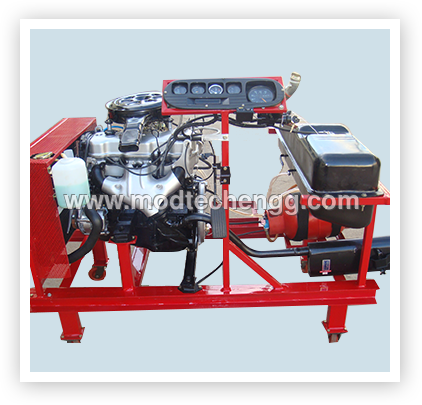
Tell us about your requirement

Price:
Quantity
Select Unit
- 50
- 100
- 200
- 250
- 500
- 1000+
Additional detail
Mobile number
Email


 Send Inquiry
Our Products
- Cut Section Complete Chassis With Electricals
- Cut Section Complete Chassis Without Electricals
- MODEL OF ENGINE ASSEMBLY WITH CLUTCH & GEAR BOX
- CUT SECTION MODEL OF ENGINE
- Engine Assembly with Clutch & Gear Box
- CUT SECTION MODEL OF TWO STROKE SINGLE CYLINDER DI
- Cut section Model Of Gear Box
- Cut section Model of Steering Gear Box
- Cut Section Model of Clutches
- Cut Section Model of Differential with Rear Axle
- Cut Section Model of Brake System
- Cut Section Model of Electrical System
- Cut Section Model of Fuel Supply System
- Cut Section Model Of Suspension System
- Cut Section Model Of Lubrication & Cooling System
- Cut Section Model Of Different Small Components
- Four Stroke Petrol Carburettor Engine For Practice
- Four Stroke Petrol Mpfi Engine Setup For Practice
- 4 Stroke Petrol Carburator Engine With Lpg Setup
- Four Stroke Petrol Mpfi Engine With Lpg Setup
- Four Stroke Diesel Engine Setup
- Two Wheeler Petrol Engine Of Running Condition
- Instruction Boards/Training Platforms
- Training Module For The Engines
- Test Rigs
- Cut section model Of Complete Vehicle
- Cut Section Model Of Engine Working
- Cut section Model Of Different Automobile Parts
- Cut Section Model Of Two Wheeler Aggregator
- Practice/ Running Engine Setup
- Tool And Equipments
- Model Of Auto Electricals
- Garage Tools & Equipments
- Cut Sectioned Engine Assembly With Clutch & Gear
- Exhibition Models

Plot No. 95, Behind Omex Auto, Bommasandra Jigani Link Road, Jigini Post, Bengaluru - 562105, Karnataka, India

Mr Sunil J.
(Partner)
Mobile :08045479896
 Send Inquiry
 Send SMS
Developed and Managed by Infocom Network Private Limited.
