
Call us now :08045479896
 Send Inquiry
 Send Inquiry
Four Stroke Four Cylinder Petrol Engine Test Rig
MOQ : 1 Unit
Four Stroke Four Cylinder Petrol Engine Test Rig Specification
- Style
- Technical, Educational Laboratory Equipment
- Assembly
- Fully Assembled & Ready to Use
- Power Type
- Petrol Engine (Four Stroke)
- Size
- Standard Lab Size (Customizable on Request)
- Model No
- FS4CPETR-2400
- Surface Finish
- Powder Coated, Anti-Corrosive
- Weight
- Approx. 320 Kg
- Features
- RPM Measurement, Torque Indicator, Fuel Measurement, Temperature Sensors, Mounted Instrumentation Panel
- Use
- Engine Performance and Study
- Type
- Four Stroke, Four Cylinder Petrol Engine Test Rig
- Material
- Heavy Duty MS Frame with Alloy/Engine Grade Components
- Dimensions
- 2400 mm x 1200 mm x 1500 mm (L x W x H)
- Shape
- Rectangular Platform with Cylindrical Engine Mount
- Color
- Blue and Metallic Grey
- Function
- Performance Test, Detailing Study
- Age
- Designed for College & University Level Education
- Advantage
- Real-time Analysis, Accurate Measurements, Durable Build
- Ignition System
- Electronic/Distributor
- Documentation
- Operation Manual and Experiment Sheets Included
- Exhaust System
- Standard Silencer Fitted
- Starting Method
- Self Start (12V DC Battery)
- Safety Features
- Emergency Stop, Overload Protection, Insulated Wiring
- Accessories
- Set of Connecting Pipes, Measuring Instruments, Spare Fuse
- Calibration
- Factory Calibrated, Calibration Certificate Provided
- Engine Capacity
- 1200 - 1500 cc
- Loading System
- Rope Brake Dynamometer
- Cooling System
- Water Cooled
- Operating Voltage
- 220V AC, 50 Hz for Instrumentation
- Service
- Onsite Installation and Training on Request
- Engine Power
- 35 HP @ 4000 RPM
- Instrumentation
- Digital RPM, Fuel Consumption Unit, Load Cell, Exhaust Gas Analyzer
Four Stroke Four Cylinder Petrol Engine Test Rig Trade Information
- Minimum Order Quantity
- 1 Unit
- Payment Terms
- Telegraphic Transfer (T/T), Paypal, Western Union, Cheque
- Supply Ability
- 100 Units Per Week
- Delivery Time
- 1 Week
- Main Export Market(s)
- North America, Eastern Europe, Middle East, Africa, Western Europe, Central America, South America, Asia, Australia
- Main Domestic Market
- All India
About Four Stroke Four Cylinder Petrol Engine Test Rig
FOUR STROKE FOUR CYLINDER PETROL ENGINE TEST RIG.
Engine: Re-conditioned/Brand New MPFI Engine (De-rated 10HP, 1500rpm)
Parameters measured
Performance test
Heat balance test
Morse test
Standard Accessories
Fuel Measurement consumption by Volumetric method
Air Consumption using standard orifice & MS Air box
Digital RPM meter (Except Mechanical loading)
Digital Electronic torque controller for Eddy current dynamometer
Digital temperature gauges (Air IN, Exhaust OUT, Cooling Water IN, Cooling Water OUT)
Water flow Measurement through Rotormeter 2400 LPH
| MT-Y02-A | With Rope Brake Dynamometer |
| MT-Y02-B | With Hydraulic Brake Dynamometer |
| MT-Y02-C | With Electrical Dynamometer |
| MT-Y02-D | With Eddy Current Dynamometer |
| MT-Y02-E | With Eddy Current Dynamometer & Computerized Module |
Comprehensive Engine Performance Analysis
This test rig enables detailed study and evaluation of four-stroke, four-cylinder petrol engines in real time. Students can measure and analyze RPM, torque, fuel consumption, and exhaust gas parameters using integrated digital instrumentation and sensors. It is ideal for performance mapping and efficiency studies, making it an essential educational tool.
User-Friendly Operation and Safety
Equipped with a self-start system, emergency stop, overload protection, and insulated wiring, the rig prioritizes user safety and ease of use. All critical measurement instruments are factory-calibrated with certification provided. Operation manuals and experiment sheets simplify the setup and execution of lab experiments.
Durability and Customization
Constructed from heavy-duty MS frame with engine-grade alloy components, the unit is powder-coated and anti-corrosive for extended service life. The dimensions and layout are standard for laboratory settings, with customization options available to meet specific academic or research requirements.
FAQs of Four Stroke Four Cylinder Petrol Engine Test Rig:
Q: How is the Four Stroke Four Cylinder Petrol Engine Test Rig typically used in an educational laboratory?
A: This test rig is used for hands-on learning, allowing students to analyze engine performance metrics such as RPM, torque, fuel consumption, and exhaust emissions. It supports experimentation with various loads and operating conditions, providing real-time data for critical study and performance evaluation.Q: What processes can be demonstrated with this engine test rig?
A: The rig facilitates engine performance testing, efficiency calculations, analysis of emission levels, and the study of mechanical losses. It also enables demonstration of load variations using the rope brake dynamometer and showcases the principles of water-cooling and electronic ignition systems.Q: When is the calibration of measuring instruments necessary, and how is it managed?
A: All instruments come factory-calibrated and include a calibration certificate. Re-calibration is typically required at predetermined intervals, or if accuracy issues arise. The process can be managed according to the provided operation manual, or through manufacturer assistance if needed.Q: Where should this engine test rig be installed for optimal operation?
A: It is best to install the rig in a well-ventilated, standard laboratory space with access to 220V AC power supply. Adequate clearance around the rigs dimensions (2400 x 1200 x 1500 mm) is necessary for safe and convenient operation and experimentation.Q: How does the digital instrumentation panel benefit users during experiments?
A: The mounted digital instrumentation panel allows users to monitor RPM, torque, fuel usage, and exhaust gas measurements in real time. This enables precise data collection and comprehensive analysis for each experiment, enhancing the learning and evaluation process.Q: What are the main safety features of this engine test rig?
A: The rig incorporates an emergency stop button, overload protection, and insulated wiring to ensure user safety during operation. All components are securely mounted, with the wiring and fuse systems designed to minimize the risk of electrical hazards.Q: What advantages does this rig offer over traditional engine test setups?
A: This model provides real-time, accurate measurements with advanced instrumentation, robust construction, and a factory-calibrated, ready-to-use assembly. Documentation, training, and installation support make it particularly advantageous for academic environments, ensuring reliable data collection and simplified operation.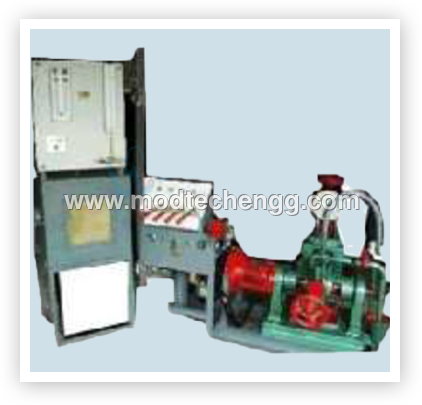
Tell us about your requirement

Price:
Quantity
Select Unit
- 50
- 100
- 200
- 250
- 500
- 1000+
Additional detail
Mobile number
Email

More Products in Test Rigs Category
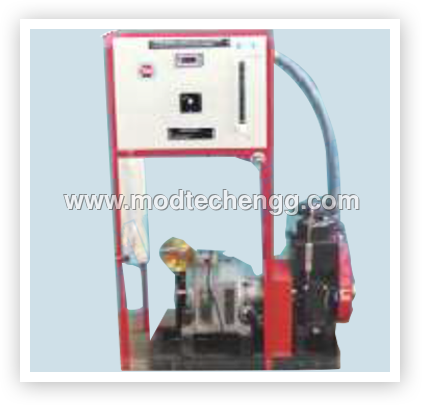
Single Cylinder Four Stroke Diesel Engine Test Rig
Price 20000 INR
Minimum Order Quantity : 1 Unit
Age : Suitable for Undergraduate, Postgraduate, and Research Laboratories
Power Type : Diesel (Compression Ignition IC Engine)
Function : Testing and Demonstration of FourStroke Diesel Engine Operation
Style : Laboratory Test Rig

 Send Inquiry
Our Products
- Cut Section Complete Chassis With Electricals
- Cut Section Complete Chassis Without Electricals
- MODEL OF ENGINE ASSEMBLY WITH CLUTCH & GEAR BOX
- CUT SECTION MODEL OF ENGINE
- Engine Assembly with Clutch & Gear Box
- CUT SECTION MODEL OF TWO STROKE SINGLE CYLINDER DI
- Cut section Model Of Gear Box
- Cut section Model of Steering Gear Box
- Cut Section Model of Clutches
- Cut Section Model of Differential with Rear Axle
- Cut Section Model of Brake System
- Cut Section Model of Electrical System
- Cut Section Model of Fuel Supply System
- Cut Section Model Of Suspension System
- Cut Section Model Of Lubrication & Cooling System
- Cut Section Model Of Different Small Components
- Four Stroke Petrol Carburettor Engine For Practice
- Four Stroke Petrol Mpfi Engine Setup For Practice
- 4 Stroke Petrol Carburator Engine With Lpg Setup
- Four Stroke Petrol Mpfi Engine With Lpg Setup
- Four Stroke Diesel Engine Setup
- Two Wheeler Petrol Engine Of Running Condition
- Instruction Boards/Training Platforms
- Training Module For The Engines
- Test Rigs
- Cut section model Of Complete Vehicle
- Cut Section Model Of Engine Working
- Cut section Model Of Different Automobile Parts
- Cut Section Model Of Two Wheeler Aggregator
- Practice/ Running Engine Setup
- Tool And Equipments
- Model Of Auto Electricals
- Garage Tools & Equipments
- Cut Sectioned Engine Assembly With Clutch & Gear
- Exhibition Models

Plot No. 95, Behind Omex Auto, Bommasandra Jigani Link Road, Jigini Post, Bengaluru - 562105, Karnataka, India

Mr Sunil J.
(Partner)
Mobile :08045479896
 Send Inquiry
 Send SMS
Developed and Managed by Infocom Network Private Limited.
