
Call us now :08045479896
 Send Inquiry
 Send Inquiry
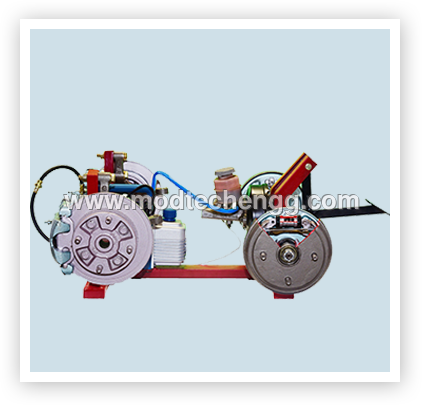
CUT SECTION MODEL OF HYDRAULIC BRAKE
MOQ : 1 Unit
CUT SECTION MODEL OF HYDRAULIC BRAKE Specification
- Stand Type
- Rigid Metal Base Stand
- Shaping Mode
- Educational Cut Section
- Material
- Metal and Acrylic Components
- Product Type
- Hydraulic Brake Model
- Mould For
- Automotive Training / Demonstration
- Mould Size
- Approx. 30 cm x 20 cm x 20 cm
- Mould Material
- Steel, Plastic, and Acrylic
- Design
- Sectioned to Show Internal Working
- Quality
- Laboratory/Teaching Standard
- Working Principle
- Demonstrates Pascal's Law and Hydraulic Transmission
- Cut Section Details
- Parts like master cylinder, brake lines, and wheel cylinder are visibly sectioned
- Packaging
- Supplied in safe packing for transport and storage
- Demonstration
- Manual operation possible for functional demonstration
- Maintenance
- Dust-resistant, easy to clean
- Visualization
- Actuating mechanisms displayed for operational clarity
- Weight
- Approx. 6-8 kg
- Mounting
- Pre-mounted on sturdy base for stability
- Finish
- Powder coated and color-coded for easy identification
- Components Included
- Brake pedal lever, master cylinder reservoir, brake lines, wheel cylinder, actuating pistons
- Application
- Suitable for engineering education, classroom demonstration, and technical training
CUT SECTION MODEL OF HYDRAULIC BRAKE Trade Information
- Minimum Order Quantity
- 1 Unit
- Payment Terms
- Western Union, Paypal, Telegraphic Transfer (T/T), Cheque
- Supply Ability
- 100 Units, , Per Week
- Delivery Time
- 1 Week
- Main Export Market(s)
- Eastern Europe, Western Europe, Africa, Central America, Middle East, South America, Asia, North America, Australia
- Main Domestic Market
- All India
CUT SECTION MODEL OF HYDRAULIC BRAKE About
Model No. MT-K06
CUT SECTION MODEL OF HYDRAULIC BRAKE UNIT -FOUR WHEEL TYPE (CUT SECTIONED AND WORKING) WITH TWO DISC AND TWO DRUM BRAKES:
This model contain two disc brakes in the front and two drum brakes at the rear and it is made out of original parts such as two master cylinder Assembly (one sectioned and one working), wheel cylinder, Brake drum, Brake Shoes, calipers etc., suitably sectioned and mounted on a sturdy iron frame. By operating the lever provided, the working procedure of the model can be demonstrated.
Demonstrating Hydraulic Principles
This cut section model effectively visualizes hydraulic transmission and Pascals Law in practice. By directly displaying the operation of the master cylinder, brake lines, and wheel cylinders, it offers students a tangible understanding of fluid power and pressure transmission. The color-coded and clear acrylic sections allow for an unobstructed internal view, making fluid movement and force distribution easy to follow during presentations or experiments.
Robust Design for Educational Settings
Constructed from metal and acrylic, the model is built to meet laboratory and teaching standards, ensuring durability and long-lasting use. Its rigid metal base ensures stability during hands-on demonstrations, and the materials are chosen for ease of cleaning and maintenance. The compact design (approximately 30 x 20 x 20 cm) makes it ideal for use on classroom benches or training tables.
FAQs of CUT SECTION MODEL OF HYDRAULIC BRAKE:
Q: How does the cut section model of hydraulic brake demonstrate Pascals Law?
A: The model enables students and instructors to observe pressure transmission from the master cylinder through brake lines to the wheel cylinder. This process clearly illustrates Pascals Law, showing how force applied at one point is transmitted equally through the hydraulic fluid, making it an effective teaching tool.Q: What educational benefits does this cut section model provide?
A: It helps learners visually and practically understand the working principles of hydraulic brakes, internal component interaction, and fluid mechanics. By providing hands-on demonstration, it reinforces theoretical knowledge with practical experience.Q: Where is this hydraulic brake model best utilized?
A: This model is primarily used in engineering colleges, vocational institutes, and technical training centers for teaching, classroom demonstrations, and skill development related to automotive and mechanical systems.Q: What components are visibly sectioned in this model?
A: Key components such as the brake pedal lever, master cylinder reservoir, brake lines, wheel cylinder, and actuating pistons are visibly sectioned and color-coded. This sectional view helps clearly identify each parts function and placement within the hydraulic brake system.Q: How is the model operated during demonstrations?
A: Manual operation is possible, allowing users to actuate the brake pedal lever to observe the internal mechanisms and fluid movement in real-time. This process provides a direct and practical demonstration of hydraulic brake function.Q: What materials are used in the construction of the model?
A: The model is manufactured using high-quality metal for structural integrity, paired with clear acrylic sections for visibility, and is finished with powder coating for durability. Color-coding further enhances part identification.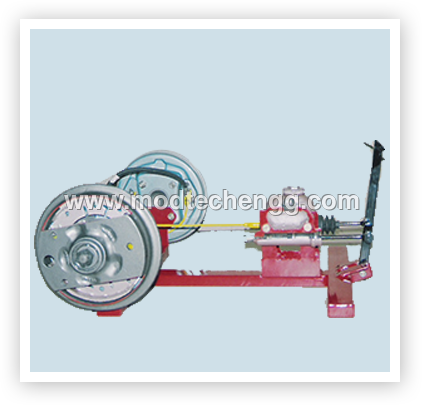
Tell us about your requirement

Price:
Quantity
Select Unit
- 50
- 100
- 200
- 250
- 500
- 1000+
Additional detail
Mobile number
Email

More Products in Cut Section Model of Brake System Category
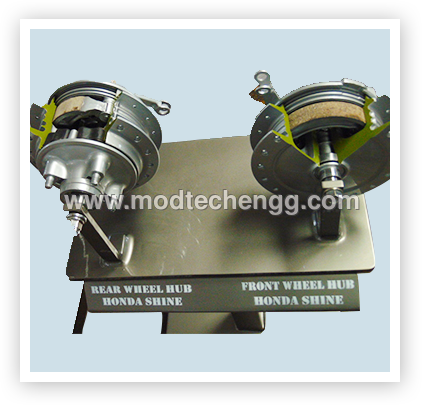
CUT SECTION MODEL OF MECHANICAL BRAKE SYSTEM
Price 20000 INR
Minimum Order Quantity : 1 , , Piece
Stand Type : Rigid Mounted Base
Quality : Premium Laboratory Quality
Mould Size : Standard Classroom Size
Product Type : Mechanical Brake System Model
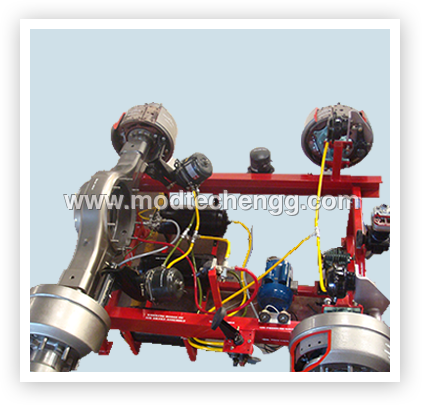
MODEL OF AIR BRAKE SYSTEM WORKING
Price 200000 INR
Minimum Order Quantity : 1 , , Unit
Stand Type : Rigid metallic frame with base support
Quality : Laboratory/Instructional Grade
Mould Size : Approx. 60 cm x 30 cm x 25 cm
Product Type : Demonstration Model
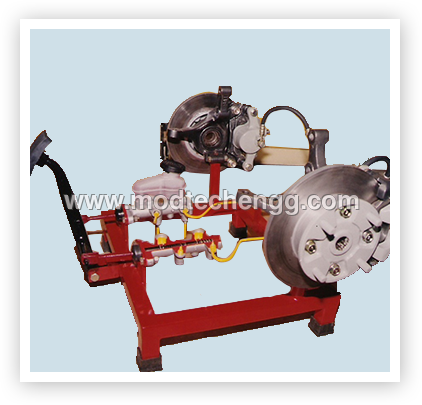
CUT SECTION MODEL OF DISC BRAKE SYSTEM
Price 200000 INR
Minimum Order Quantity : 1 Unit
Stand Type : Sturdy Base Stand
Quality : Laboratory Standard
Mould Size : Approx. 350mm x 200mm x 120mm
Product Type : Educational Demonstration Model
CUT SECTION MODEL OF AIR BRAKE SYSTEM
Price 200000 INR
Minimum Order Quantity : 1 , , Unit
Stand Type : Stable Metal Base with Mounting
Quality : Laboratory Standard Quality
Mould Size : Standard Scaled Size (Compact Tabletop)
Product Type : Educational Model

 Send Inquiry
Our Products
- Cut Section Complete Chassis With Electricals
- Cut Section Complete Chassis Without Electricals
- MODEL OF ENGINE ASSEMBLY WITH CLUTCH & GEAR BOX
- CUT SECTION MODEL OF ENGINE
- Engine Assembly with Clutch & Gear Box
- CUT SECTION MODEL OF TWO STROKE SINGLE CYLINDER DI
- Cut section Model Of Gear Box
- Cut section Model of Steering Gear Box
- Cut Section Model of Clutches
- Cut Section Model of Differential with Rear Axle
- Cut Section Model of Brake System
- Cut Section Model of Electrical System
- Cut Section Model of Fuel Supply System
- Cut Section Model Of Suspension System
- Cut Section Model Of Lubrication & Cooling System
- Cut Section Model Of Different Small Components
- Four Stroke Petrol Carburettor Engine For Practice
- Four Stroke Petrol Mpfi Engine Setup For Practice
- 4 Stroke Petrol Carburator Engine With Lpg Setup
- Four Stroke Petrol Mpfi Engine With Lpg Setup
- Four Stroke Diesel Engine Setup
- Two Wheeler Petrol Engine Of Running Condition
- Instruction Boards/Training Platforms
- Training Module For The Engines
- Test Rigs
- Cut section model Of Complete Vehicle
- Cut Section Model Of Engine Working
- Cut section Model Of Different Automobile Parts
- Cut Section Model Of Two Wheeler Aggregator
- Practice/ Running Engine Setup
- Tool And Equipments
- Model Of Auto Electricals
- Garage Tools & Equipments
- Cut Sectioned Engine Assembly With Clutch & Gear
- Exhibition Models

Plot No. 95, Behind Omex Auto, Bommasandra Jigani Link Road, Jigini Post, Bengaluru - 562105, Karnataka, India

Mr Sunil J.
(Partner)
Mobile :08045479896
 Send Inquiry
 Send SMS
Developed and Managed by Infocom Network Private Limited.
