
Call us now :08045479896
 Send Inquiry
 Send Inquiry
MODEL OF AIR BRAKE SYSTEM WORKING
MOQ : 1 , , Unit
MODEL OF AIR BRAKE SYSTEM WORKING Specification
- Stand Type
- Rigid metallic frame with base support
- Shaping Mode
- Mechanical Model
- Material
- Mild Steel, Acrylic, Plastic components
- Product Type
- Demonstration Model
- Mould For
- Air Brake System Working
- Mould Size
- Approx. 60 cm x 30 cm x 25 cm
- Mould Material
- Mild Steel & Acrylic
- Design
- Detailed cutaway & functional layout
- Quality
- Laboratory/Instructional Grade
- Components Included
- Reservoir tank, brake pedal, compressor, piping, brake chamber, control valves, and actuator
- Educational Use
- Visualizes and explains the operation and flow of air in vehicle brake systems
- Mode of Operation
- Manual (Hand-operated to simulate air brake actuation)
- Power Requirement
- Not required (manual operation only)
- Mobility
- Portable, suitable for classroom demonstration
- Working Principle
- Demonstrates the functioning of air brake system as used in automobiles
- Weight
- Approximately 8-12 kg
- Finish
- Powder coated structure and clear sectional display
- Application
- Automobile engineering laboratories, Polytechnic institutes, Training workshops
MODEL OF AIR BRAKE SYSTEM WORKING Trade Information
- Minimum Order Quantity
- 1 , , Unit
- Payment Terms
- Western Union, Paypal, Telegraphic Transfer (T/T), Cheque
- Supply Ability
- 100 Units Per Week
- Delivery Time
- 1 Week
- Main Export Market(s)
- Western Europe, Africa, Central America, Eastern Europe, South America, Asia, North America, Australia
- Main Domestic Market
- All India
About MODEL OF AIR BRAKE SYSTEM WORKING
Model No. MT-K03
MODEL OF AIR BRAKE SYSTEM WORKING:
The model is made out of Original parts such as Air compressor, Unloader valve, foot valve, Booster, Wheel assembly, air tank, control valve etc The Brake system will be fitted with two front wheel assembly complete ( with out axle) and the drum will be suitably sectioned to show the working of the brake shoe. Other system will be mounted as it is and will be made to function ( foot brake, hand brake etc will be functional.)the entire system will be mounted on a sturdy iron frame. A F.H.P Single phase220/230 V AC motor will be coupled to the compressor for generation of the air, which is used for the operation of the model.
Comprehensive Air Brake System Demonstration
This model effectively illustrates the core components and working principle of air-operated braking as used in modern vehicles. Its detailed construction allows students to observe the interaction between the compressor, reservoir, valves, brake chamber, and actuator in real time, facilitating a deeper understanding of pneumatic brake mechanisms.
Built for Practical, Hands-on Learning
Engineered with portability and durability in mind, the model offers a robust mild steel and acrylic build. Its designed for repeated classroom use, ensuring both longevity and clear visual access for group instruction. The hand-operated controls simulate real-world usage without requiring any electrical power, making it universally accessible.
FAQs of MODEL OF AIR BRAKE SYSTEM WORKING:
Q: How does the MODEL OF AIR BRAKE SYSTEM WORKING operate?
A: This model functions manually by hand-actuating the brake pedal, which simulates air compression and distribution through its system. As you operate the pedal, air moves from the reservoir tank via the pipes and control valves, eventually activating the actuator in the brake chamber to mimic actual braking.Q: What components are included in the air brake system model?
A: The model includes a reservoir tank, compressor, brake pedal, piping, brake chamber, various control valves, and an actuator. All components are assembled on a powder-coated, rigid metallic frame for stability and clear visibility of each sections function.Q: Where is this model best utilized for training purposes?
A: This air brake system model is ideally suited for automobile engineering laboratories, polytechnic institutes, and technical training workshops where it serves as a practical aid for demonstrating air brake operation.Q: When should this air brake model be used during instruction?
A: The model is most effective during lessons on vehicle brake systems, pneumatic circuit analysis, or while introducing students to automotive safety mechanisms. It is particularly useful in hands-on demonstration sessions and laboratory experiments.Q: What is the benefit of using this air brake system model for educational purposes?
A: Using this model allows students to visually and physically understand the functions and interconnections within an air brake system, fostering a better grasp of pneumatic braking and safer design principles in automobiles.Q: How portable and durable is the air brake system model?
A: Weighing between 8 to 12 kg, the model is designed for easy mobility and robust enough for rigorous use. Its mild steel and acrylic construction ensures it withstands frequent handling, making it convenient for classroom demonstrations.Q: What materials and size are used in constructing the model?
A: The model is constructed primarily from mild steel, acrylic, and plastic, guaranteeing a laboratory-grade instructional tool. It measures approximately 60 cm x 30 cm x 25 cm and is mounted on a stable metallic frame with base support.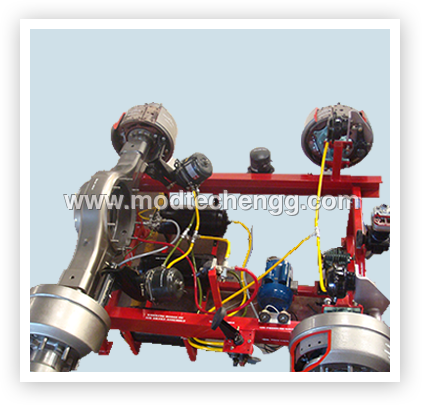
Tell us about your requirement

Price:
Quantity
Select Unit
- 50
- 100
- 200
- 250
- 500
- 1000+
Additional detail
Mobile number
Email

More Products in Cut Section Model of Brake System Category
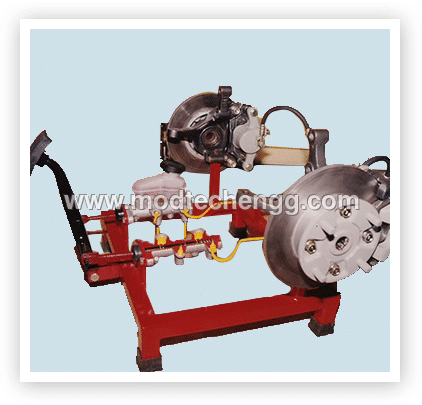
CUT SECTION MODEL OF DISC BRAKE SYSTEM TWO WHELER
Price 200000 INR
Minimum Order Quantity : 1 Unit
Design : Cut Section View with Detailed Internal Parts
Quality : Laboratory/Institutional Grade
Product Type : Educational Training Model
Material : Other, Acrylic, Metal Components
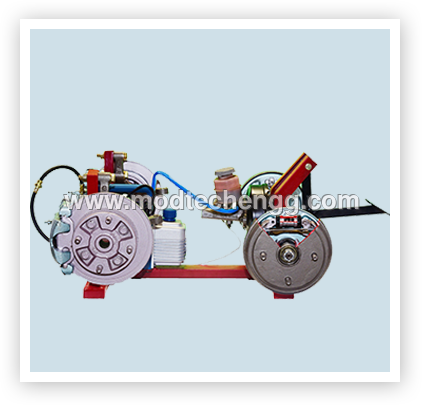
CUT SECTION MODEL OF AIR BRAKE SYSTEM
Price 200000 INR
Minimum Order Quantity : 1 , , Unit
Design : Cutaway for Internal Mechanism Visualization
Quality : Laboratory Standard Quality
Product Type : Educational Model
Material : Other, High Grade Plastic and Metal Components
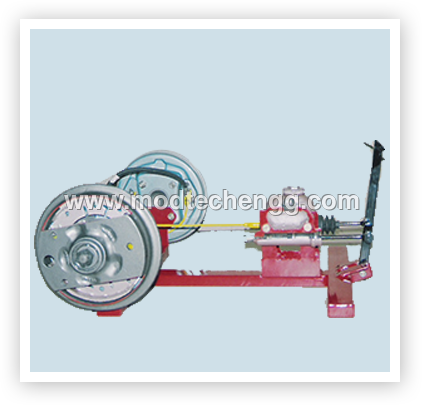
CUT SECTION MODEL OF HYDRAULIC BRAKE
Price 20000 INR
Minimum Order Quantity : 1 Unit
Design : Sectioned to Show Internal Working
Quality : Laboratory/Teaching Standard
Product Type : Hydraulic Brake Model
Material : Other, Metal and Acrylic Components
CUT SECTION MODEL OF MECHANICAL BRAKE SYSTEM
Price 20000 INR
Minimum Order Quantity : 1 , , Piece
Design : Sectional View Exposing Internal Mechanism
Quality : Premium Laboratory Quality
Product Type : Mechanical Brake System Model
Material : Other, Metal and High Grade Plastic

 Send Inquiry
Our Products
- Cut Section Complete Chassis With Electricals
- Cut Section Complete Chassis Without Electricals
- MODEL OF ENGINE ASSEMBLY WITH CLUTCH & GEAR BOX
- CUT SECTION MODEL OF ENGINE
- Engine Assembly with Clutch & Gear Box
- CUT SECTION MODEL OF TWO STROKE SINGLE CYLINDER DI
- Cut section Model Of Gear Box
- Cut section Model of Steering Gear Box
- Cut Section Model of Clutches
- Cut Section Model of Differential with Rear Axle
- Cut Section Model of Brake System
- Cut Section Model of Electrical System
- Cut Section Model of Fuel Supply System
- Cut Section Model Of Suspension System
- Cut Section Model Of Lubrication & Cooling System
- Cut Section Model Of Different Small Components
- Four Stroke Petrol Carburettor Engine For Practice
- Four Stroke Petrol Mpfi Engine Setup For Practice
- 4 Stroke Petrol Carburator Engine With Lpg Setup
- Four Stroke Petrol Mpfi Engine With Lpg Setup
- Four Stroke Diesel Engine Setup
- Two Wheeler Petrol Engine Of Running Condition
- Instruction Boards/Training Platforms
- Training Module For The Engines
- Test Rigs
- Cut section model Of Complete Vehicle
- Cut Section Model Of Engine Working
- Cut section Model Of Different Automobile Parts
- Cut Section Model Of Two Wheeler Aggregator
- Practice/ Running Engine Setup
- Tool And Equipments
- Model Of Auto Electricals
- Garage Tools & Equipments
- Cut Sectioned Engine Assembly With Clutch & Gear
- Exhibition Models

Plot No. 95, Behind Omex Auto, Bommasandra Jigani Link Road, Jigini Post, Bengaluru - 562105, Karnataka, India

Mr Sunil J.
(Partner)
Mobile :08045479896
 Send Inquiry
 Send SMS
Developed and Managed by Infocom Network Private Limited.
